

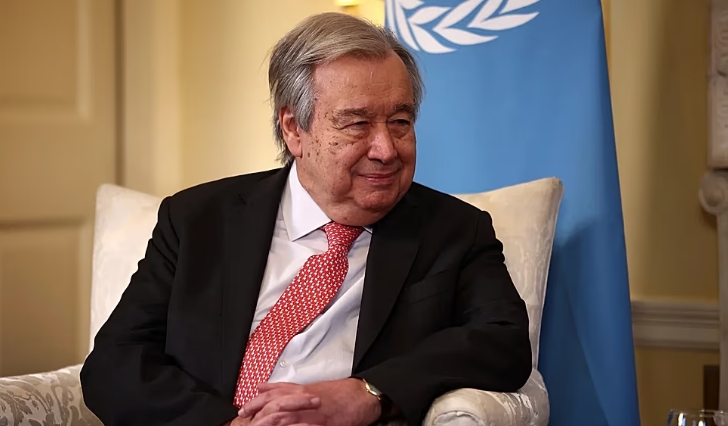
The United Nations has formed a 40-member global scientific panel to study the risks and impacts of artificial intelligence (AI), marking what Secretary-General Antonio Guterres described as a “foundational step toward global scientific understanding of AI.” The panel, approved by a 117-2 vote in the UN General Assembly, will produce annual reports assessing AI’s opportunities, risks, and societal effects. The United States and Paraguay voted against the initiative, while Tunisia and Ukraine abstained. Major powers including Russia, China, and European nations voted in favor.
Guterres said the panel will provide “rigorous, independent scientific insight that enables all member states, regardless of their technological capacity, to engage on an equal footing.” The UN highlighted that this is the first global scientific body specifically focused on AI.
The panel’s creation comes amid growing concern over AI practices in the private sector. Former employees at major AI companies have publicly expressed alarm. Mrinank Sharma, a former safety researcher at Anthropic, said in an open letter that “the world is in peril” due to AI and other crises. Zoe Hitzig, formerly OpenAI’s top researcher, told the New York Times that she has “deep reservations” about her former employer’s approach. Leading figures including Anthropic CEO Dario Amodei, OpenAI CEO Sam Altman, and Apple co-founder Steve Wozniak have also raised concerns about the technology’s risks.
The 40 panel members were selected from over 2,600 candidates following independent reviews by UN bodies and the International Telecommunications Union. Members will serve three-year terms. European representatives include Joelle Barral from France, Melahat Bilge Demirkoz of Turkey, Anna Korhonen of Finland, Mark Coeckelbergh from Belgium, Aleksandra Korolova of Latvia, Andrei Neznamov from Russia, Maximilian Nickel and Bernhard Scholkopf of Germany, Roman Orus of Spain, Johanna Pirker of Austria, and Piotr Sankowski and Silvio Savarese from Poland and Italy, respectively.
Despite opposing the panel, the United States still has two representatives: Vipin Kumar, a professor at the University of Minnesota, and linguistics expert Martha Palmer, formerly at the University of Colorado. Lauren Lovelace, the US representative, described the panel as “a significant overreach of the UN’s mandate and competence,” arguing that AI governance should not be dictated by the UN. She urged the UN to focus on core missions such as international peace, security, human rights, and humanitarian assistance, rather than attempting to regulate technologies central to economic and strategic competition.
US policy on AI regulation remains cautious, with President Donald Trump advocating minimal federal oversight to avoid slowing innovation through complex state or international rules. Analysts note that both the United States and China continue to compete closely in AI adoption, making governance and global standards a contentious issue.
The panel’s reports are expected to influence international discussions on AI safety, ethics, and regulation, providing guidance for member states navigating the rapid development of the technology.