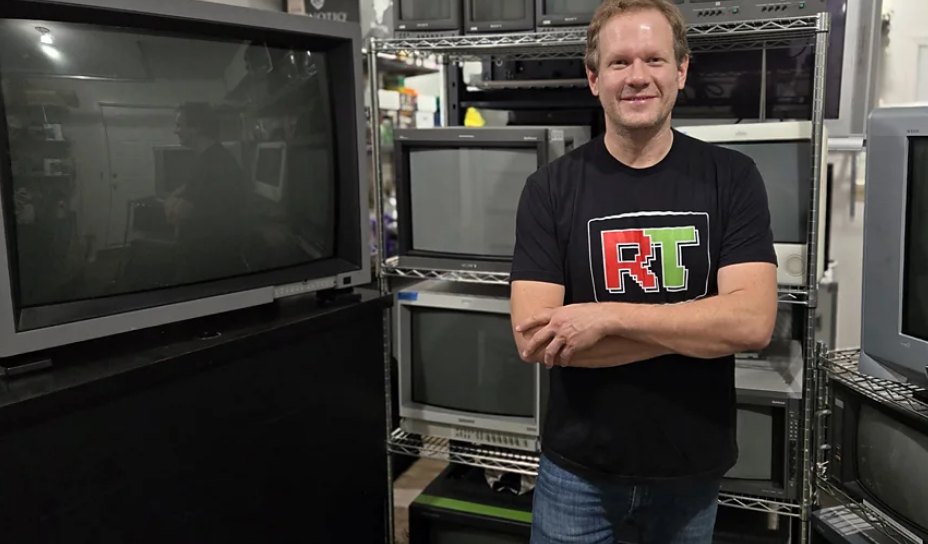
They were long ago replaced by slim, high-resolution flat screens, but cathode-ray tube (CRT) televisions are enjoying an unlikely comeback. Once destined for landfill, the bulky sets with thick glass screens have become prized collectibles for retro gaming fans – and some are paying thousands of dollars to get them.
For Shaan Joshi, a game developer from central Florida, the attraction was instant. When he spotted 10 professional video monitors (PVMs) listed for sale online, he paid $2,500 without hesitation. Unlike standard televisions, PVMs were built for medical and broadcast use, offering superior picture quality and multiple connectors. Today, they are considered the gold standard by enthusiasts who want to experience classic games as they were originally designed to be played.
“Being tapped into the scene gives you a competitive edge,” Joshi said. “It’s about knowing enough people to find these sets before they disappear.”
The nostalgia-driven market has transformed over the past decade. Once sold off cheaply as obsolete technology, certain CRT models now fetch over $1,000, while repairs can cost hundreds more. Collectors often hunt in warehouses, recycling centers, or online marketplaces. A cottage industry of resellers and technicians has sprung up to meet demand, with some, like Virginia-based YouTuber Steve Nutter, making a business out of restoring broken PVMs. “They used to be thrown in the garbage,” he said. “Now they’re treated like antiques.”
CRT technology dates back more than a century, with the first commercial models appearing in the 1930s. For decades, the cathode-ray tube powered everything from living room televisions to radar screens and hospital equipment. By the late 1990s, however, flat-panel displays had taken over, offering larger, cheaper, and lighter alternatives. Millions of CRTs were discarded, piling up in recycling centers.
Yet collectors insist the old sets have qualities modern screens cannot replicate. Retro gamers argue that the glow, depth, and pixelation of CRTs give older titles their authentic look and feel. Some fans even watch modern shows and films on them, drawn by their warmth and distinctive “zap-pop” sound when switched on.
Beyond gaming, CRTs retain niche uses in industry and defense. A handful of companies still manufacture them for military vehicles, pilot helmets, and specialist machinery. Video artists also continue to use them in installations, stacking sets to create striking visual effects.
For Joshi, the obsession is about more than technology. He has built a personal collection of dozens of sets and estimates their remaining lifespans carefully. “I’ll always have at least one working PVM,” he said. “These aren’t just televisions – they’re pieces of history.”