


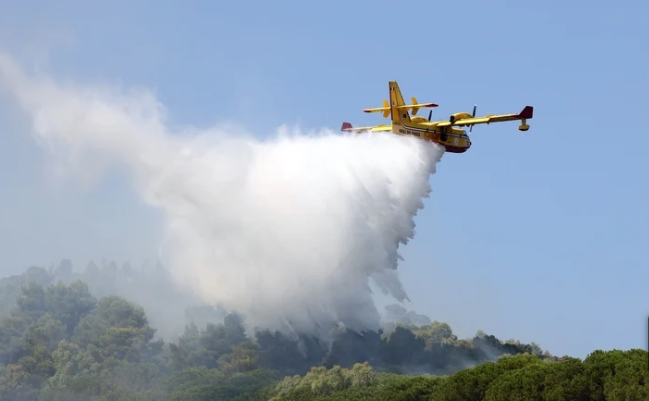
Firefighters in Italy have been battling a wildfire on the slopes of Mount Vesuvius, prompting the closure of all hiking routes to the volcano’s summit near Naples.
The blaze, which erupted in the Vesuvius National Park last Friday, has spread across parts of the mountain, leading the national fire service to deploy 12 ground teams and six Canadair water-bombing aircraft. Additional crews have been sent from other regions, and drones are being used to track the fire’s spread.
Park authorities announced the suspension of all activities on the trail network “until further notice” to ensure public safety and allow firefighting and cleanup operations to proceed unhindered. The closure comes after nearly 620,000 visitors toured the volcano’s crater in 2024. While the Pompeii archaeological site remains open, smoke from the fire has been visible from the historic ruins.
In neighbouring France, emergency services have managed to contain a massive wildfire in the southern Aude department, although officials warn that extreme heat and dry winds could reignite the flames. The blaze, the largest in the region in at least 50 years, has already destroyed 16,000 hectares of vegetation, killed one person, and injured several others.
Christophe Magny, head of the regional firefighting unit, said the fire was “no longer spreading” but would not be brought under full control until later in the evening, and complete extinguishment could take weeks. More than 1,300 firefighters remain on alert, with fears that the strong tramontane wind could flare up hotspots.
Authorities expect temperatures to reach 40°C this weekend, with tomorrow forecast to be the hottest day nationwide. Christian Pouget, prefect of the Aude department, said the coming days would be “challenging” for firefighters as the heatwave intensifies.
The fire’s toll on local communities has been devastating. In Saint-Laurent-de-la-Cabrerisse, a 65-year-old woman died when flames engulfed her home. One resident suffered severe burns, four others sustained minor injuries, and 19 firefighters were hurt, including one with a head injury.
For farmers, the loss has been catastrophic. In Fontjoncouse, livestock breeder Emmanuelle Bernier returned to find her goat pen in ruins, with 17 animals—some close to giving birth—lost to the flames. “Everything here was built around the sheep, and seeing the flock leave was incredibly difficult,” she said, adding that she may be forced to abandon farming altogether.
Experts warn that recurring summer heatwaves, fuelled by climate change, are making southern Europe increasingly vulnerable to such disasters, leaving communities to rebuild in the shadow of scorched landscapes.