

Oil prices rose sharply on Monday after renewed fighting between the United States and Iran heightened concerns about the security of energy supplies passing through the Strait of Hormuz, a vital shipping route for global crude exports.
Brent crude, the international benchmark, gained 3.2 percent in early trading to reach $90.95 per barrel, while US West Texas Intermediate crude advanced 2.8 percent to $84.04 per barrel. The increases came after the United States carried out a ninth consecutive night of strikes against Iranian targets, with Tehran responding by launching attacks against US allies across the Middle East.
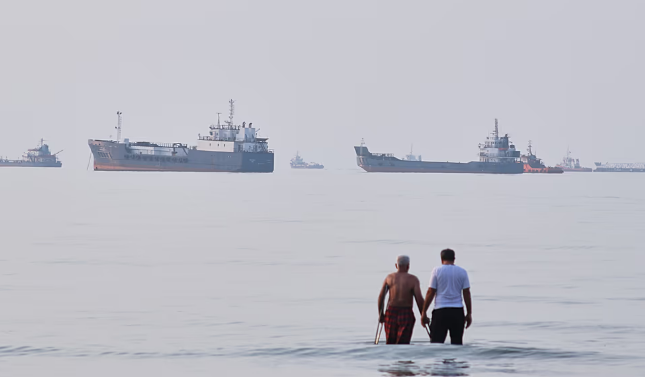
The latest escalation has intensified fears that prolonged conflict could disrupt one of the world’s busiest oil transit routes. The Strait of Hormuz carries around one-fifth of global oil shipments, making any interruption a major concern for energy markets.
ING commodities strategists Warren Patterson and Ewa Manthey said the continuing exchange of attacks between Washington and Tehran was raising the risk of wider instability across the Gulf.
“The US and Iran continue to exchange strikes, which are proving to be deadly for both sides,” the analysts said in a market note. They warned that if the conflict continues to escalate, it could lead to widespread attacks across the Persian Gulf.
They also noted that tanker traffic through the Strait of Hormuz had slowed significantly, increasing concerns over oil supplies and contributing to the upward movement in crude prices.
The renewed geopolitical tensions added to uncertainty across global financial markets, where investors have already become cautious following strong gains in technology stocks linked to artificial intelligence.
AI-related shares, including semiconductor manufacturers, fell on Friday as investors questioned whether heavy investment in artificial intelligence could be creating excessive market valuations. Many traders chose to lock in profits after months of strong performance in the sector.
Jonas Goltermann, chief markets economist at Capital Economics, said the worsening conflict in the Gulf could place additional pressure on global markets.
He said the return of military confrontation around the Strait of Hormuz may increasingly weigh on investor sentiment, particularly if strong earnings from major technology companies continue to receive a cautious response from markets.
Investor confidence was also affected by the release of another advanced artificial intelligence model from China. Beijing-based Moonshot AI introduced its open-source Kimi K3 model, prompting fresh debate about growing competition in the AI industry.
Market observers compared the reaction to the release of China’s DeepSeek model earlier in 2025, which unsettled global technology stocks by demonstrating that lower-cost Chinese AI developers could compete with established international companies such as Anthropic and OpenAI.
With military tensions in the Middle East showing little sign of easing and investors monitoring developments in both energy and technology sectors, markets are expected to remain volatile in the days ahead.