
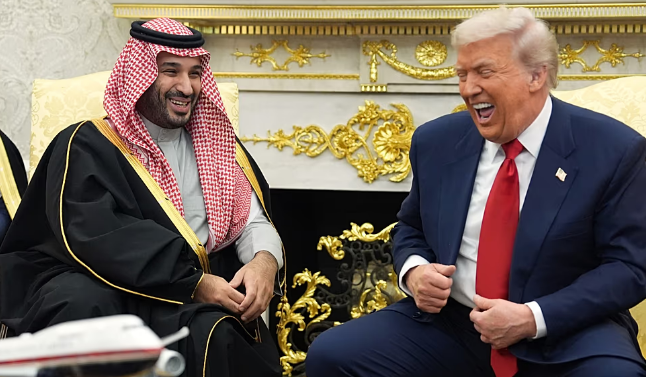
The United States and Saudi Arabia have signed a nuclear cooperation agreement that will allow the kingdom to develop a civilian nuclear energy programme, though the full details of the deal have not been made public.
The agreement could potentially allow Saudi Arabia to establish facilities capable of enriching uranium, a sensitive technology that can be used to produce fuel for nuclear power plants but can also be adapted for weapons development.
US Energy Secretary Chris Wright and Saudi Energy Minister Abdulaziz bin Salman formally signed the agreement, which includes bilateral safeguards intended to prevent nuclear proliferation.
“These agreements reflect our two nations’ shared commitment to strengthening US-Saudi commercial relations, delivering prosperity at home and security to our allies abroad,” Wright said.
He added that the agreements would maintain high standards for nuclear safety and non-proliferation while relying on US technology and expertise.
The deal is expected to remain in force for 30 years and would involve American technology in the development of Saudi Arabia’s nuclear programme.
However, the agreement does not include the International Atomic Energy Agency’s Additional Protocol, according to a person familiar with the matter. The protocol provides expanded powers for inspections, monitoring and verification of a country’s nuclear activities.
The absence of the additional safeguards is likely to draw further scrutiny in Washington, where lawmakers from both parties have previously expressed concern about allowing Saudi Arabia to develop uranium enrichment capabilities.
Enrichment technology is at the centre of international concerns over nuclear proliferation because the same process used to produce reactor fuel can, at higher levels, create material suitable for nuclear weapons.
US Secretary of State Marco Rubio sought to address concerns about the agreement before its announcement, saying Washington would not approve a deal that created a risk of nuclear proliferation.
“The US is not going to reach any agreement with any country in the world that leads to the risk of proliferation,” Rubio told reporters while travelling in the Philippines.
The agreement will now be submitted to Congress for review. Although opposition is expected, President Donald Trump’s Republican Party controls both chambers, making it unlikely that lawmakers will block the deal.
The agreement comes at a particularly sensitive time for nuclear diplomacy in the Middle East. The United States and Israel have launched military action against Iran amid longstanding concerns over Tehran’s nuclear programme.
Iran has repeatedly said its nuclear activities are peaceful and intended for civilian purposes.
The Saudi agreement is likely to intensify debate over the balance between expanding civilian nuclear energy and preventing the spread of technology that could be used to develop nuclear weapons.