

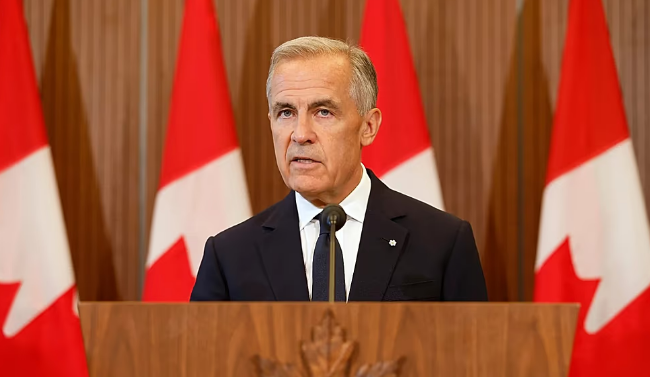
Canadian Prime Minister Mark Carney has accused the United States of imposing new tariffs designed to damage Canada and divide the two countries after trade negotiations collapsed.
“We cannot accept what they’ve offered, and we will not give what they’ve asked,” Carney said in a speech on Saturday, explaining Ottawa’s decision to reject a proposed agreement.
New US tariffs of 50 percent on about $20 billion worth of Canadian goods took effect on Saturday after negotiators failed to reach a deal. Both governments accused the other of making last-minute changes that undermined the negotiations.
Carney said the final US proposals were “unfair” and “uneconomic” and raised doubts about whether Washington could be relied upon to honour an agreement.
Canada has responded by promising to match the new US tariffs “dollar for dollar” in an effort to protect domestic companies and workers.
“Our response will be concentrated in sectors such as steel, dairy, appliances, agricultural equipment, pulp and paper, and electronics,” Carney said.
The latest measures add to existing US tariffs on major Canadian exports, including steel, aluminium, automobiles and lumber. Canadian officials have warned that the broader tariff regime is placing additional pressure on businesses and the country’s economy.
The Office of the United States Trade Representative described the collapse of the negotiations as a “missed opportunity” for Canada. It accused Ottawa of maintaining what it called prolonged retaliation against American products.
According to the US trade representative, Washington had offered Canada favourable treatment compared with other major exporters, but said new Canadian demands and changes to previous commitments disrupted the balance reached during negotiations.
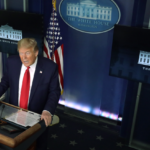
The dispute escalated despite earlier optimism from US President Donald Trump, who had postponed the introduction of the latest tariffs after suggesting that a trade agreement was close.
Trump has repeatedly criticised Canada’s trade policies and has also suggested that the country should become the 51st US state. In a post early Sunday, he argued that Canada wanted the benefits of being part of the United States without actually becoming a state.
Trump’s administration has pursued an aggressive tariff policy since returning to office in January 2025, arguing that higher import duties will support American manufacturing and create domestic jobs.
The policy has drawn criticism from businesses and economists, who warn that tariffs can increase costs for consumers, disrupt supply chains and make companies more cautious about investment.
The latest confrontation leaves the two neighbours facing a prolonged period of uncertainty, with businesses on both sides preparing for higher trade costs and possible further retaliatory measures.