

Germany could miss its legally required gas storage target for November if facilities continue to be filled at the current rate, the country’s storage association has warned, raising concerns about the potential impact of a severe winter on industry.
Sebastian Heinermann, managing director of the gas-storage association INES, said Germany would fail to reach the required 70% storage level by November 1 if injections did not accelerate.
German storage facilities were about 51.5% full on August 25, compared with roughly 69% at the same time last year. Germany has Europe’s largest gas-storage capacity, meaning its slower pace of refilling is also contributing to wider concerns across the region.
Heinermann said Germany currently had around 45 terawatt-hours less gas in storage than a year earlier, a volume roughly equivalent to the Czech Republic’s entire storage capacity.
About 78% of Germany’s available storage capacity has already been booked, but this does not mean the facilities will necessarily be filled. Traders reserve storage space, while the decision to inject gas depends largely on market prices and commercial conditions.
High gas prices have reduced the incentive for companies to store additional supplies. The normal business model involves buying gas during the summer when prices are lower, storing it and selling it during the winter when demand rises.
The European benchmark Dutch TTF front-month contract was trading at around €69 per megawatt-hour on Friday, compared with about €29 at the start of the year.
Energy company Uniper said current market conditions were limiting storage injections. It said the situation did not indicate an immediate shortage and that Germany could still reach 70% or higher if market conditions created stronger incentives for companies to store gas.
SEFE cited industry analysis suggesting the target could still be achieved if injections averaged around 0.75 TWh per day. RWE Gas Storage West also said it expected the target to be reached at current rates.
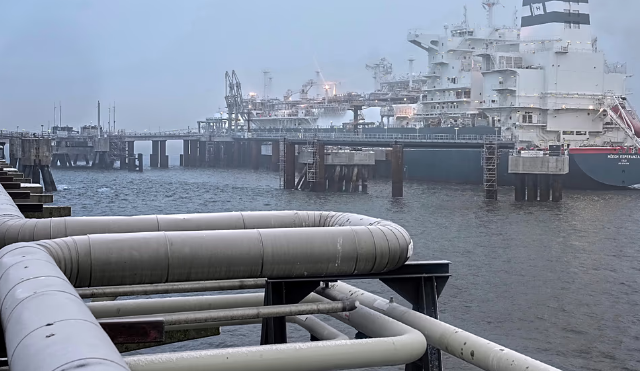
The German Economy Ministry said a gas shortage was not expected this winter. Officials pointed to pipeline supplies from Norway, LNG terminals and imports from neighbouring countries as additional sources of security.
Germany’s Federal Network Agency also said the country had sufficient import and storage capacity and that gas remained available on the market.
The main concern would arise if storage levels remained low during an exceptionally cold winter. Heinermann warned that Germany could struggle to meet normal demand under such circumstances, potentially forcing industrial users to cut production if prices became unaffordable.
Gas remains important to German manufacturing, households and electricity generation. It accounted for 16.1% of domestic electricity production in 2025.
The pharmaceutical and mechanical engineering sectors have warned that a combination of low storage, extreme cold and disruptions to LNG or pipeline imports could cause serious problems.
INES has called for stronger financial incentives, including removing network charges and the gas conversion levy for storage operations. Reducing bureaucracy could also encourage faster injections.
Germany plans to establish a strategic gas reserve from the 2027-28 storage year, with a proposed capacity of about 24 TWh. The reserve is not expected to help with the coming winter.