US President Donald Trump has described a newly announced agreement involving Venezuela’s vast oil reserves as “the biggest oil deal in world history”, but the White House has released few details about the arrangement.
Trump said the deal would give the United States a significant stake in Venezuela’s oil resources and advance his administration’s goal of expanding access to the country’s huge reserves. The agreement was announced Friday night after US forces captured former Venezuelan President Nicolás Maduro in January and brought him to New York to face federal drug trafficking charges.
Venezuela’s interim leader, Delcy Rodríguez, presented the agreement as an important step towards rebuilding the country’s struggling energy industry. In a televised address Sunday, she said Venezuela would retain control of its natural resources and aimed to turn the country into a major global energy producer.
No full text of the agreement has been released, leaving major questions about its structure, financing and implementation.
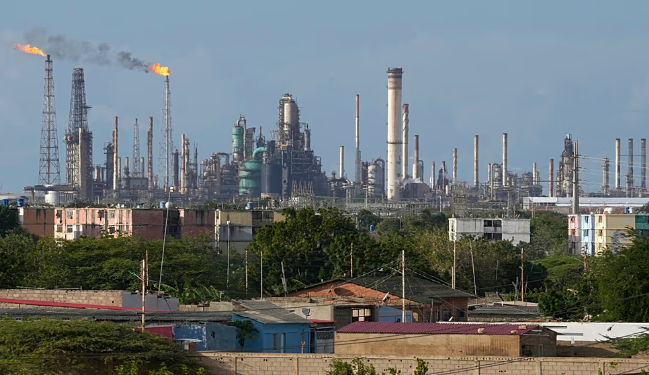
According to Rodríguez, the agreement covers 17 oil fields with proven potential of 65 billion barrels. She said the project could attract about $100 billion in investment and generate more than $209 billion in tax revenue for Venezuela.
A US official, speaking anonymously, said the arrangement gives the United States an effective 55% share of the new private company’s output. That figure reportedly combines an ownership stake with rights to purchase oil at cost.
The official said oil purchased by the United States would be directed towards the US Strategic Petroleum Reserve and military requirements. If the figures are confirmed, the company would rank among the world’s largest holders of proven oil reserves.
The agreement has already triggered criticism inside Venezuela. Some opponents argue that granting US interests access to the country’s oil resources violates a long-standing principle that Venezuela’s natural wealth should remain under national control.
Ricardo Hausmann, a former Venezuelan planning minister and Harvard University professor, called the arrangement a “shameful deal” and questioned Rodríguez’s authority to approve it.
Rodríguez rejected those concerns, insisting that Venezuela would maintain ownership and sovereignty over its resources. She said the government wanted to attract major international companies, including Chevron, Repsol and Shell, to expand investment.
The agreement has also divided US lawmakers. Republican supporters described it as a historic economic opportunity, while Democratic senators accused Trump of pursuing Venezuelan oil as a central objective of his policy.
Questions remain over the identity of the private operator, the division of ownership and who will finance the large investments needed to develop Venezuela’s oil fields.
Industry support is also uncertain. Chevron, the only US oil company currently producing oil in Venezuela, declined to comment, while Exxon Mobil also declined to discuss the agreement.
Analysts have warned that damaged infrastructure, political uncertainty and logistical difficulties could make the proposed investment difficult to deliver, despite Venezuela’s enormous oil reserves.