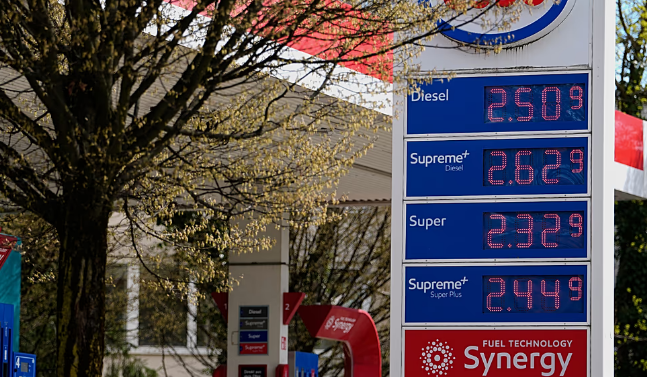
Eurozone inflation rose sharply in August, reaching 3.3 percent as energy prices climbed at their fastest pace in months amid higher oil and gas costs and disruption to shipping through the Strait of Hormuz.
The annual inflation rate increased from 2.9 percent in July, according to a flash estimate from Eurostat, the European Union’s statistical office. The rise puts inflation well above the European Central Bank’s 2 percent target and could strengthen expectations of another interest rate increase.
Energy prices were the main driver behind the acceleration. They rose 14.3 percent in the year to August, up from an annual increase of 10.3 percent in July. On a monthly basis, energy prices increased 2.9 percent, contributing significantly to the overall rise in consumer prices.
Services inflation, which is closely monitored by the ECB because it tends to be more persistent, eased to 3 percent in August from 3.3 percent in July.
Core inflation also slowed slightly. The measure, which excludes energy, food, alcohol and tobacco, fell from 2.5 percent to 2.4 percent. Food, alcohol and tobacco prices increased 1.2 percent from a year earlier, unchanged from July.
The figures indicate that higher energy costs have not yet translated into a broad increase in underlying price pressures. However, economists expect elevated gas and food prices to continue affecting inflation in the months ahead.
Leo Barincou, senior economist at Oxford Economics, said the increase was driven by a rebound in fuel prices following the renewed closure of the Strait of Hormuz. He said underlying price pressures remained contained because services inflation had eased, but inflation was likely to stay above the ECB’s target into next year.
Inflation varied considerably across the eurozone. Lithuania recorded the highest rate among countries included in the flash estimate, at 5.8 percent, while Estonia had the lowest at 1.3 percent.
Among the bloc’s largest economies, inflation stood at 2.7 percent in France and 2.9 percent in Germany, both below the eurozone average. France nevertheless saw a notable increase from 2.4 percent in July. Spain recorded inflation of 4.5 percent, while Italy reached 3.2 percent.
Markets are expecting the ECB to raise interest rates by 0.25 percentage points at its September 10 meeting as policymakers respond to renewed price pressures.
Barincou said inflation was accelerating and the ECB was highly likely to raise rates next week, but warned against assuming that another increase would immediately follow, given that underlying inflation pressures remain relatively contained.
The latest figures leave policymakers facing a difficult balance between controlling inflation and avoiding excessive pressure on economic activity.