


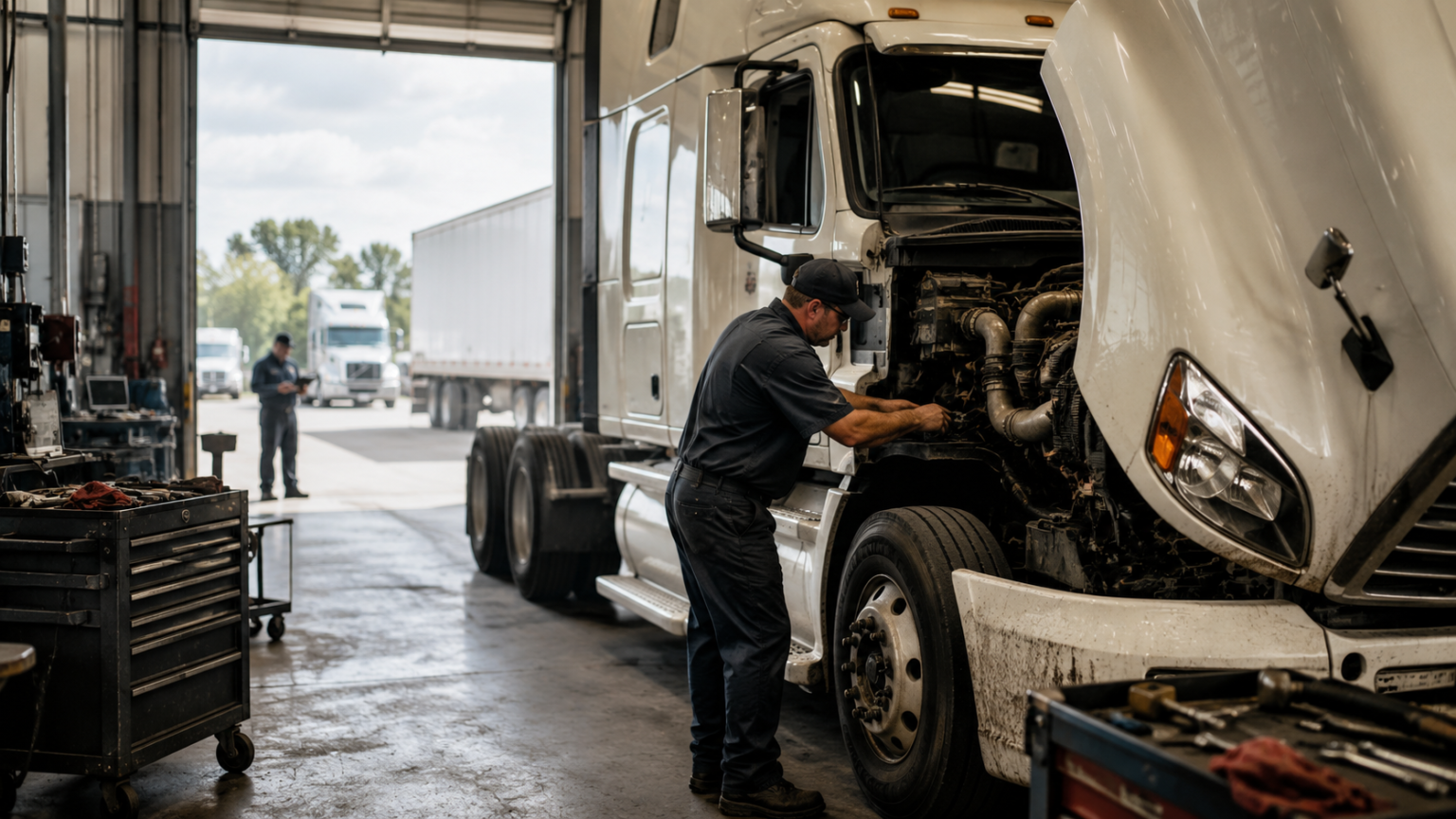
For businesses that depend on commercial vehicles, a truck sitting in a repair shop represents more than a maintenance problem. It can mean missed deliveries, idle employees, disrupted schedules, and lost revenue.
That makes fleet downtime a business issue. Commercial vehicles are productive assets, and when they stop moving unexpectedly, the financial consequences can extend well beyond the repair bill.
Rising Costs Put More Pressure on Fleets
According to the American Transportation Research Institute’s 2026 Analysis of the Operational Costs of Trucking, the average cost of operating a truck reached a record $2.336 per mile in 2025, up 3.4% from the previous year.
Repair and maintenance costs increased 8.6%, adding further pressure on businesses operating commercial vehicles.
While companies cannot control every operating expense, maintenance is one area where better planning can influence both costs and vehicle availability.
The Real Cost of Downtime
A breakdown can create towing charges, emergency labour costs, expedited parts expenses and replacement vehicle fees. Businesses may also continue paying wages, insurance and financing while the vehicle produces no revenue.
Operational disruption can be just as significant. A distributor may need to rearrange deliveries, a contractor could lose productive hours, or a service company may have to cancel customer appointments.
Because these expenses are often spread across different departments, businesses can easily underestimate what downtime actually costs.
Preventive Maintenance Can Reduce Risk
Postponing scheduled maintenance might reduce expenses temporarily, but those savings can disappear quickly if the decision contributes to an unexpected breakdown.
Preventive maintenance gives businesses greater control. Service can be scheduled around operations, parts can be ordered in advance, and replacement vehicles can be arranged when necessary.
Businesses can make better decisions by calculating their own downtime costs, including lost revenue, employee wages, towing, emergency repairs and replacement vehicles.
The Fleet Downtime Cost Calculator from Heavy Duty Journal can help businesses estimate these expenses and evaluate the potential financial impact of vehicle downtime.
Maintenance Is Becoming an Investment
Modern commercial vehicles also provide valuable information through mileage, engine hours, fault codes and maintenance records. Tracking this data can help businesses identify recurring problems before they develop into more expensive failures.
Reliability also affects customers. Vehicle breakdowns can delay deliveries, disrupt projects, and prevent service teams from arriving as scheduled. Repeated problems can ultimately damage customer relationships and a company’s reputation.
For businesses that rely on commercial vehicles, the goal should not simply be to spend less on maintenance. It should be to balance maintenance costs with reliability, productivity, and vehicle availability.
A truck sitting in the shop is more than a repair expense. It is a productive business asset that has temporarily stopped producing.