

Russia’s intensified attacks on Ukraine are raising doubts about the European Union’s financial support strategy, as Kyiv faces mounting economic damage, growing military needs and a significant funding shortfall for 2027.
European diplomats acknowledge that the war is likely to continue longer than previously expected, putting pressure on the bloc to reconsider how it will finance Ukraine’s defence and public services in the coming years.
“This war will last longer than we thought,” one European diplomat said, warning that Ukraine’s needs would continue to grow without a clear agreement on how additional assistance would be funded.
Another diplomat said the EU needed to demonstrate that its position remained unchanged, maintaining support for Ukraine while increasing pressure on Moscow.
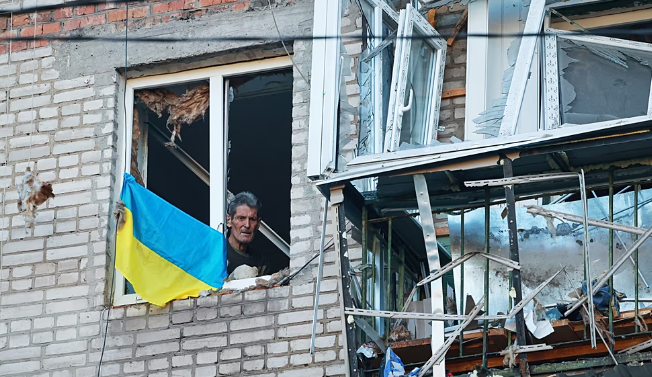
Russian attacks have struck infrastructure, including railways, bridges, power stations, warehouses, medical facilities, schools and data centres. Recent strikes have killed civilians, including more than 30 people in Kramatorsk after a glide bomb attack set two public buses on fire, according to reports cited by Euronews.
Kyiv also suffered a major power disruption, raising concerns about the impact of further attacks as winter approaches. Ukrainian President Volodymyr Zelenskyy condemned the bombardment, describing it as terror against civilians, while European Commission President Ursula von der Leyen said the attacks amounted to war crimes.
The escalation is also damaging Ukraine’s economy. Repeated airstrikes have disrupted businesses, forced closures, increased costs and reduced profits. Russia’s blockade in the Black Sea has added to the pressure by restricting Ukrainian farmers’ ability to export grain, cutting off an important source of national income.
The worsening situation has placed the EU’s €90 billion support loan under scrutiny. Agreed last year, the package was intended to cover about two-thirds of Ukraine’s financial needs in 2026 and 2027, based on expectations that the war could end this year.
Ukraine’s Finance Minister Sergii Marchenko has warned that preparing the 2027 budget will be particularly difficult. Kyiv estimates it needs international assistance to address a funding gap of $78 billion, equivalent to about €70 billion.
The European Commission has not endorsed that full estimate, but Economy Commissioner Valdis Dombrovskis acknowledged on Friday that Ukraine faced a substantial shortfall. Brussels plans to provide €45 billion next year under the existing loan and has promised faster payments, subject to domestic reforms.
EU leaders have yet to formally reopen discussions on additional assistance, as member states negotiate the bloc’s next long-term budget. However, diplomats expect the issue to return to the agenda amid rising borrowing costs, sluggish economic growth and opposition from far-right parties.
The absence of US aid, previously a major source of military support, has further complicated the outlook.
Some EU countries have renewed calls to use frozen Russian assets to finance Ukraine, arguing that the existing loan will not be sufficient. Belgium, which holds much of the immobilised assets, has resisted the proposal, while France and Italy remain cautious.
Issuing more joint EU debt is also politically difficult because of rising borrowing costs. Increasing national contributions could place a disproportionate burden on Germany, the Netherlands and Nordic countries.
Brussels is therefore urging allies, including the United Kingdom, Canada and Japan, to increase their support while officials examine alternative funding options.
Dombrovskis said the EU remained committed to ensuring Ukraine received the financial assistance it needed for as long as the war continued.