

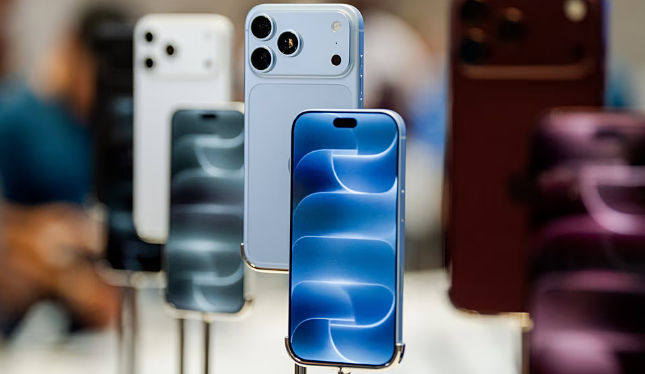
Apple has begun testing its artificial intelligence features with developers in China, nearly two years after their initial launch in the United States, as the company works to strengthen its position in a market dominated by increasingly competitive local smartphone brands.
The trial of Apple Intelligence, the company’s suite of AI-powered tools, began on Wednesday and is initially limited to developers. Apple said public access is expected to follow in December.
The features first became available in the US and other markets in autumn 2024, but their introduction in China was delayed by strict government regulations governing artificial intelligence services. Google and OpenAI, whose models support some of Apple’s AI features in other markets, are not available in China.
To meet local requirements, Apple is partnering with Alibaba and using its Qwen AI models to support more advanced features alongside the company’s own tools.
The initial release includes 18 features, among them live translation of phone calls and tools to summarise and proofread messages. However, it does not include the latest upgrade to Apple’s voice assistant, Siri.
Ivan Lam, a senior analyst at Counterpoint Research, said the launch addressed a long-standing gap in Apple’s AI offering. However, he cautioned that the move might not give the company a significant advantage in China’s crowded smartphone market.
Qwen is a family of open-weight AI models and assistants developed by Alibaba, the Chinese e-commerce and cloud computing group. Its capabilities include writing, translation, summarisation and computer programming. Most versions can be downloaded and adapted by developers without charge, helping the technology gain widespread adoption.
Apple is not the only international company using Qwen in China. BMW is developing an in-car assistant based on Alibaba’s models for its Neue Klasse vehicles produced in the country from 2026. Mercedes-Benz has established a separate AI partnership with ByteDance.
Qwen is also expanding its presence in Europe. UEFA signed a multi-year agreement with Alibaba in May to use the technology for fan engagement and content management.
China’s regulatory framework requires AI service providers to register with the internet regulator, use local data centres and process data within the country. Apple received regulatory approval in July after reportedly holding partnership discussions with several Chinese technology companies, including Alibaba, Baidu, ByteDance and Tencent.
Zhang Yi, founder of research firm iiMedia, described Apple’s reliance on local partners as a structural concession that could limit its control over pricing and the AI experience offered to Chinese customers.
Research firm Omdia estimates that more than 110 million iPhones in China are capable of running Apple Intelligence. However, local smartphone manufacturers and internet companies are also developing AI features and digital assistant ecosystems.
Apple’s revenue in Greater China, which includes Hong Kong and Taiwan, increased 21 per cent in the latest quarter, but competition remains a significant challenge as the company seeks to expand its AI services in the region.