

Artificial intelligence is opening new possibilities for people living with Alzheimer’s disease, with technology being used to recreate personal memories and support therapies aimed at preserving connections with their past.
For Hilde Vautmans, a Belgian member of the European Parliament, watching her father gradually lose his memories was a deeply painful experience. The disease eventually left him unable to recognise his own daughter.
“That is something that hurts so much you cannot even describe it,” Vautmans said.
Her experience reflects the challenges faced by millions of families across Europe as relatives living with dementia struggle to remember personal stories, recognise loved ones and recall shared experiences.
Dementia currently affects more than 12 million people in Europe, a figure projected to reach 20 million by 2050, according to Alzheimer Europe. Alzheimer’s disease accounts for between 60% and 80% of dementia cases.
While early diagnosis can help patients access treatment and support, researchers and technology developers are also exploring ways to improve the quality of life of people already experiencing memory loss.
One approach gaining attention is reminiscence therapy, which traditionally uses photographs, familiar objects and music to encourage people to recall experiences from their lives.
New technologies, including virtual reality and artificial intelligence, are now being explored to make these sessions more personalised.
One initiative is Synthetic Memories, developed by Barcelona-based creative studio Domestic Data Streamers. The project uses generative AI to transform people’s descriptions of personal experiences into visual images.
Launched in care homes in 2023, the initiative has worked with older people, including those living with Alzheimer’s and other forms of dementia, in collaboration with social workers and neurotherapists in Spain.
During sessions lasting around an hour, an interviewer and an AI-powered prompt system help participants describe memories from their lives. AI models then generate images based on the stories they share.
The project is not intended to cure Alzheimer’s or reverse memory loss. Instead, it aims to complement reminiscence therapy by providing visual material that can help people engage with their personal histories.
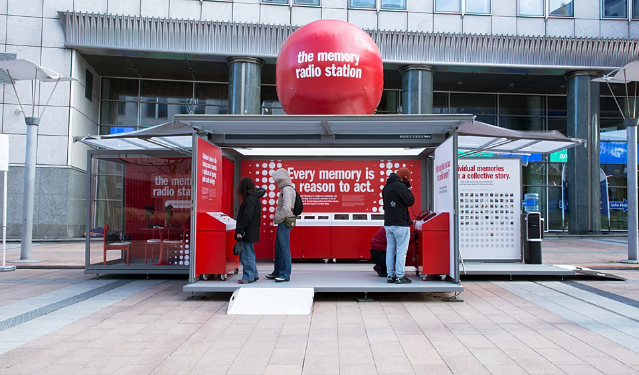
The initiative has since become part of The Memory Radio Station, a travelling exhibition organised in partnership with pharmaceutical company Eli Lilly. The exhibition is visiting European locations to raise awareness about memory loss and encourage public discussion.
In November, it arrived at the European Parliament in Brussels, where Vautmans participated by sharing memories of her childhood with her father, including visits to the cattle market in Sint-Truiden, the Belgian town where she grew up.
She recalled accompanying him as he tried to sell cows and weighed them at the market.
Vautmans also highlighted the importance of recognising Alzheimer’s symptoms early. In her family’s experience, obtaining a diagnosis took considerable time because initial memory problems were attributed to stress and overwork.
Early diagnosis can help patients access appropriate treatment, care and interventions, while also supporting greater independence and reducing anxiety.
Frederic Destrebecq, executive director of the European Brain Council, said the exhibition offered an opportunity to reflect on the importance of memory and the human brain.
The initiative highlights how emerging technology could support people living with dementia while encouraging families to recognise symptoms and seek medical advice sooner.