

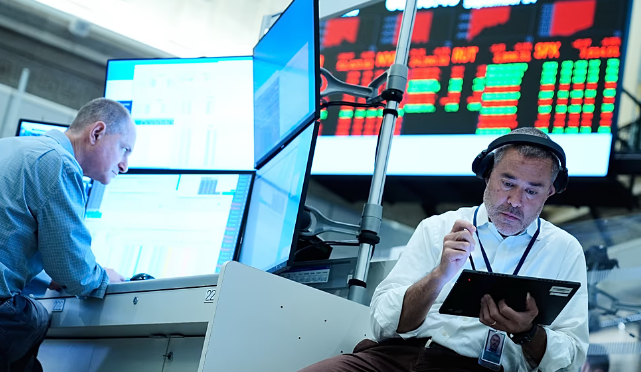
Asian stock markets rose on Thursday as technology shares regained ground following several sessions of sharp losses, while investors showed a muted reaction to new US tariff proposals targeting 14 economies.
The recovery followed a late-session rally on Wall Street on Wednesday, when investors bought shares that had fallen sharply earlier in the day. US markets ended only slightly lower ahead of the Thanksgiving holiday.
Technology companies led gains across Asia, particularly in South Korea, Japan and Taiwan, which have experienced significant volatility this week amid concerns about the sustainability of the artificial intelligence boom.
Japanese chipmaker Kioxia and investment group SoftBank were among the strongest performers, with both recording double-digit gains. South Korean technology giants SK hynix and Samsung Electronics also advanced.
The Nikkei 225 in Tokyo, South Korea’s Kospi and Taiwan’s Taiex each gained more than 1 per cent. Hong Kong’s Hang Seng Index also rose by over 1 per cent, while markets in Sydney, Shanghai and Singapore recorded gains. Wellington and Manila moved lower.
Global markets have experienced sharp swings throughout the week. News that Nvidia chief executive Jensen Huang had been reinstated initially lifted sentiment in Asian markets on Tuesday, but a renewed sell-off followed on Wednesday as investors reassessed the outlook for technology stocks.
The latest weakness comes after a strong start to the year. Selling pressure over the past five months has been driven by concerns about the enormous spending required to develop AI infrastructure and uncertainty over when those investments will generate returns. Expectations of higher interest rates and the prospect of tighter AI regulation under a new Democrat-led US Congress have added to investor caution.
Some market observers believe the recent decline could be approaching its final stages. However, Michael Boutros of Forex.com said investors needed to show that buying demand was sustainable rather than the result of temporary recoveries.
“The focus heading into December is on whether semiconductor shares can regain traction and support a broader recovery or whether the recent deterioration signals further downside,” he said.
Expectations of a possible Federal Reserve rate increase next month strengthened on Wednesday after US data showed inflation had reached a three-year high in the previous month. Figures also showed that economic growth in the third quarter had been revised upwards.
Investors also assessed Washington’s proposed tariffs on 14 economies following a months-long investigation into alleged excess production. The proposed duties, which could reach 20 per cent, will undergo a public consultation process before any implementation.
The targeted economies include major US trading partners such as the European Union, India, Japan and South Korea. China faces a proposed 20 per cent tariff, among the highest rates announced.
US Trade Representative Jamieson Greer said the measures were consistent with existing trade negotiations with Beijing. China urged Washington to avoid escalating tensions, warning against “tariff wars and trade wars”.