


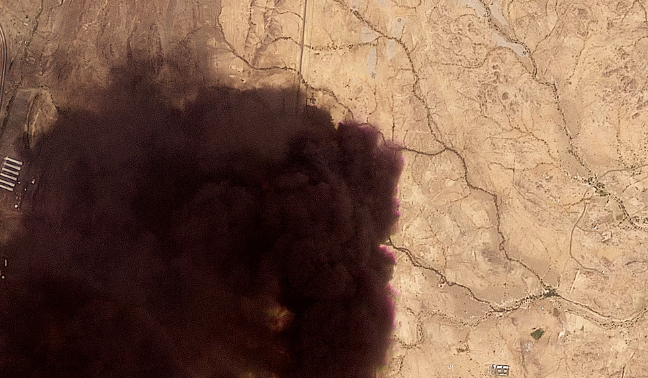
Brent crude prices climbed above $108 a barrel on Monday as growing disruption around the Strait of Hormuz raised fresh concerns about global oil supplies.
Brent crude for October and November deliveries rose by more than 3% during morning trading, extending gains from the previous week when prices moved back above the $100 mark. US West Texas Intermediate crude for October delivery also advanced, rising about 2.3% to around $102 a barrel.
The latest increase followed Saudi Arabia’s announcement that its East-West oil pipeline had been temporarily shut after drone attacks. The pipeline transports crude across Saudi Arabia to ports on the Red Sea, providing an alternative route that allows exports to bypass the Strait of Hormuz.
The closure comes as shipping through the strategic waterway faces growing risks. An unnamed merchant vessel was struck in the strait on Sunday, killing one crew member and injuring three others, according to Iranian authorities.
Shipping conditions have changed significantly since the conflict began. Vessels are required to obtain permission from Iran to pass through the waterway, while Tehran is also considering a system for charging transit service fees. Ships that do not comply have faced attacks, while US forces have carried out periodic strikes along Iran’s coastline.
Diplomatic efforts to address the situation have also suffered a setback. Oman postponed planned talks between Iran and Gulf states concerning the future of the waterway, which is one of the world’s most important routes for seaborne oil shipments.
The disruption is already affecting fuel markets beyond the Gulf. In the United States, the national average price of diesel surpassed $6 a gallon on Friday for the first time, rising from about $5.85 a week earlier and roughly 60% above the $3.71 recorded a year ago.
US petrol prices have also reached record levels, averaging about $4.22 a gallon after rising over the Labor Day weekend.
President Donald Trump has blamed Ukraine for part of the diesel supply pressure, saying Ukrainian President Volodymyr Zelenskyy should stop targeting Russian diesel infrastructure. Ukraine has attacked more than 20 Russian refinery targets this summer, while Russia responded by banning diesel exports.
According to Lipow Oil Associates, Russia’s export restrictions have removed about 800,000 barrels per day of diesel supply, while disruptions linked to the Strait of Hormuz have affected around 1.2 million barrels per day.
The broader impact on crude supplies is even greater. Oil flows through the Strait of Hormuz have fallen from about 20 million barrels per day before the war to roughly 7 million. The conflicts have also disrupted refineries representing about 5 million barrels per day of capacity, adding to pressure on global fuel markets.