

China and Singapore have agreed to expand access to yuan financing for businesses, including companies involved in international trade beyond China, as Beijing steps up efforts to increase the use of its currency in global transactions.
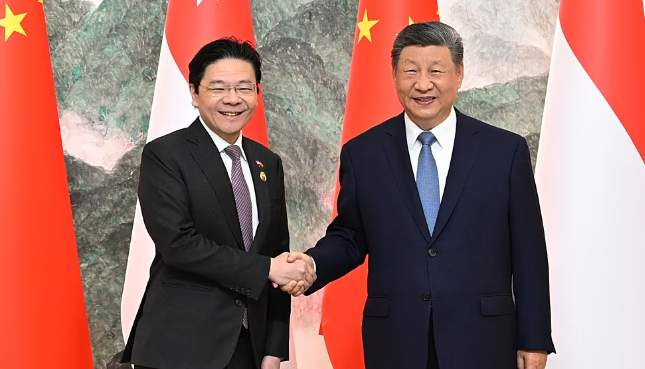
The measures were announced on Monday during the Joint Council for Bilateral Cooperation meeting in Singapore, co-chaired by Singapore Deputy Prime Minister Gan Kim Yong and Chinese Vice Premier Ding Xuexiang.
The two countries announced 29 agreements and cooperation initiatives covering finance, trade, technology and healthcare. The package includes new arrangements, renewals of existing agreements and proposals for further cooperation.
Under the financial measures, the Monetary Authority of Singapore (MAS) and the People’s Bank of China will restructure an existing yuan funding arrangement supported by a currency swap agreement between the two central banks.
The revised framework will allow eligible financial institutions in Singapore to access yuan funding for a wider range of lending activities. These include financing international trade, covering daily business expenses and supporting investments. Loans will be available for periods of one, three or six months.
A second facility will continue providing backup yuan liquidity to Singapore-based financial institutions. The range of assets that banks can use as security for borrowing will also be expanded, while discussions continue over whether Chinese government bonds can be accepted as collateral.
The two central banks are also examining a possible connection between their fast payment systems to facilitate smaller cross-border transfers. However, Singapore’s central bank did not announce any increase in the overall funding available under the arrangements.
The agreement comes as Beijing seeks to promote the international use of the yuan, also known as the renminbi, and reduce its dependence on the US dollar for trade and financial transactions.
An August analysis by the Reserve Bank of Australia found that the proportion of China’s trade settled in yuan had increased from below 20% in 2021 to around 35%. However, the currency remains relatively uncommon in international transactions that do not involve China.
The yuan accounts for less than 2% of global foreign exchange reserves, compared with substantially larger shares held by the US dollar and euro. Restrictions on capital movements across China’s borders and the country’s less developed financial markets continue to limit its international adoption.
The latest initiatives build on existing financial links between Singapore and China. DBS has already introduced yuan clearing services to help financial institutions process payments in the currency. Both countries also intend to support businesses seeking stock market listings and financing opportunities in each other’s markets.
Beyond financial cooperation, the two governments announced plans for an economic corridor connecting Singapore with Tianjin Eco-City and Xiong’an New Area in northern China.
Singapore National Development Minister Chee Hong Tat said the initiative would help companies from the Tianjin region use Singapore as a platform for expansion into Southeast Asia while creating opportunities for Singaporean businesses in China.
The announcements follow Friday’s decision to begin negotiations on upgrading the China-Singapore Free Trade Agreement, with discussions expected to cover the digital economy, government procurement and easier cross-border data transfers.