
Families and industries across Europe are bracing for rising energy costs as gas and petrol prices climb, stoking fears of another cost-of-living crisis similar to the one that followed Russia’s invasion of Ukraine. The European Commission has urged people to work more from home and reduce travel, warning that the situation could worsen depending on developments in the Middle East.
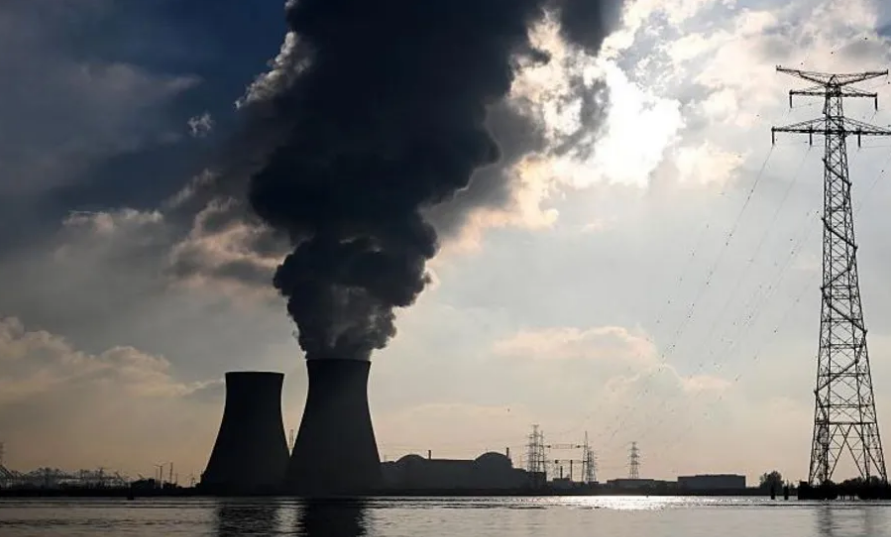
The energy crunch has reignited discussions about energy independence and the role of nuclear power in Europe’s electricity mix. At the recent European Nuclear Energy Summit in Paris, European Commission President Ursula von der Leyen called Europe’s historic retreat from nuclear energy a “strategic mistake.” In 1990, nuclear power accounted for around one-third of Europe’s electricity generation; today, the average stands at just 15 percent. The continent imports over 50 percent of its energy, mostly oil and gas, leaving it vulnerable to supply disruptions and price spikes, as seen with Russia and now Iran’s control over the Strait of Hormuz.
Gas prices are rising broadly across the continent, but electricity costs vary depending on national energy mixes. Spain, with substantial wind and solar capacity, is projected to see electricity prices roughly half those of gas-reliant Italy. France, Europe’s largest nuclear producer, generates about 65 percent of its electricity from nuclear power, keeping domestic prices significantly lower than Germany, where nuclear plants were phased out after the 2011 Fukushima disaster. German industry, heavily reliant on gas, faces rising costs, and economic forecasts for 2026 have been slashed to 0.6 percent GDP growth.
Several European nations are reconsidering nuclear power. Italy is preparing legislation to reverse its nuclear ban, Belgium is revisiting investment plans, Greece is exploring advanced reactor designs, Sweden has reversed a four-decade-old nuclear exit, and the UK is streamlining regulations to accelerate projects. Chancellor Rachel Reeves emphasized that nuclear energy is vital for resilience, energy security, and economic growth. Public support is also growing, with recent YouGov polls indicating a majority in Scotland now favor nuclear power as part of the national energy mix.
French President Emmanuel Macron has positioned nuclear as a low-carbon solution that can support both energy independence and the continent’s net-zero goals. He highlighted its potential to meet the rising energy demands of AI and data centers, framing nuclear power as a strategic tool for competitiveness.
Small modular reactors (SMRs) have emerged as a promising option for medium-term energy solutions. These factory-built, cost-effective reactors could supply local heating, hydrogen production, and data center electricity. The EU has launched a €330 million investment package to support SMRs, while the UK, US, and Japan are also advancing projects. However, no SMR construction licenses have been granted in the EU, and fusion research remains long-term.
Experts warn nuclear is not an immediate fix. Many existing reactors need investment to maintain output, and high upfront costs remain a barrier compared with cheaper wind and solar power. Chris Aylett, a Chatham House research fellow, stressed that nuclear is part of Europe’s long-term solution but requires time, funding, and careful planning.
For now, Europe continues to rely heavily on imported fossil fuels, but governments are increasingly positioning nuclear as a key pillar of energy security and independence in the face of geopolitical uncertainty.