

A sharp rise in fuel prices triggered by the conflict in Iran has accelerated global demand for electric vehicles, with Chinese manufacturers emerging as major beneficiaries of the shift away from fossil fuels.
China, already the world’s largest producer of electric vehicles, is seeing growing international orders as consumers respond to higher petrol and diesel costs. Although Chinese automakers remain largely excluded from the United States market, they are expanding rapidly across Europe, Asia and Latin America.
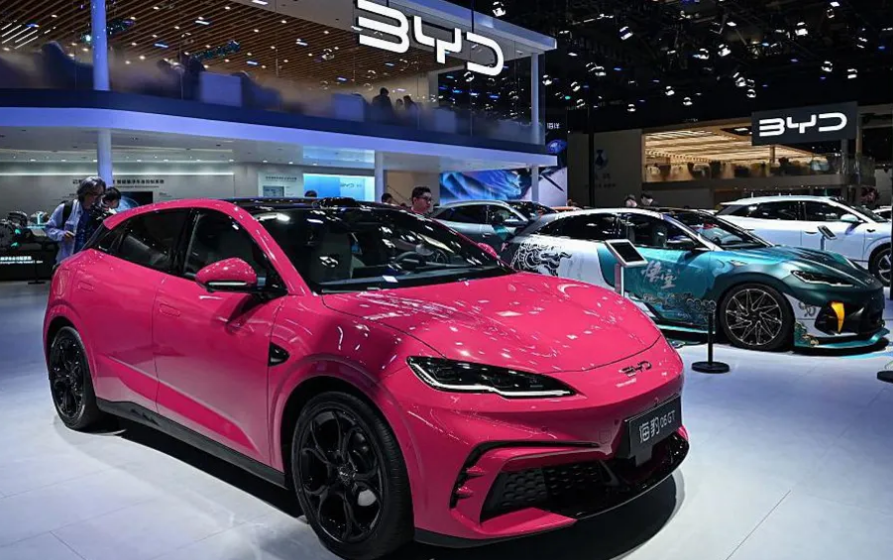
At the centre of this expansion is BYD, which surpassed Tesla as the world’s top electric vehicle seller last year. The company is now pushing aggressively into overseas markets while facing limited access to the US due to trade restrictions.
“We survive and are successful without the US market today,” said BYD executive vice-president Stella Li at the Beijing Auto Show. “Our demand is much higher than what we can supply.”
Li said rising oil prices are directly influencing consumer behaviour, making electric vehicles more attractive due to lower running costs. She added that demand in markets such as the UK, Brazil and Europe is currently outpacing production capacity.
To address concerns over charging time, BYD is introducing new “flash charging” technology capable of delivering hundreds of kilometres of driving range in just minutes. The company says this innovation could help remove one of the key barriers to wider EV adoption.
The Beijing Auto Show, one of the largest automotive exhibitions globally, showcased more than 1,400 vehicles from domestic and international manufacturers, with Chinese brands taking a dominant position.
However, the industry’s global expansion is unfolding amid growing geopolitical tension. Chinese EV makers face tariffs and increased regulatory scrutiny in several Western markets, particularly in the United States, where concerns remain over subsidies, data security and national security risks.
Despite these challenges, Li said Chinese firms are gaining recognition in markets such as the United Kingdom, where competition is shifting from price alone to technology leadership in areas such as batteries, software integration and charging systems.
“We are not just a car company,” she said. “We are an ecosystem across batteries, solar energy, buses and trucks.”
The auto show also highlighted broader technological ambitions. Chinese company X-Peng unveiled a new electric SUV and announced plans for humanoid robots and flying cars within the next few years, reflecting rapid innovation across the sector.
Meanwhile, established global automakers including Volkswagen, Toyota and Ford are losing ground in China and increasingly partnering with local firms to stay competitive. BMW has aligned with battery maker CATL, while Volkswagen and Audi are collaborating with Chinese technology companies on electric and driver assistance systems.
Intense price competition within China has squeezed profits, even for market leaders like BYD, whose domestic sales have fallen for seven consecutive months. In contrast, its European sales surged 156% in the first quarter of this year.
Li warned that ongoing competition will likely reshape the industry. “Not all companies will survive,” she said, pointing to past cycles of consolidation in the global auto sector.