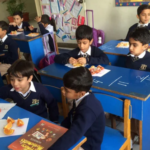


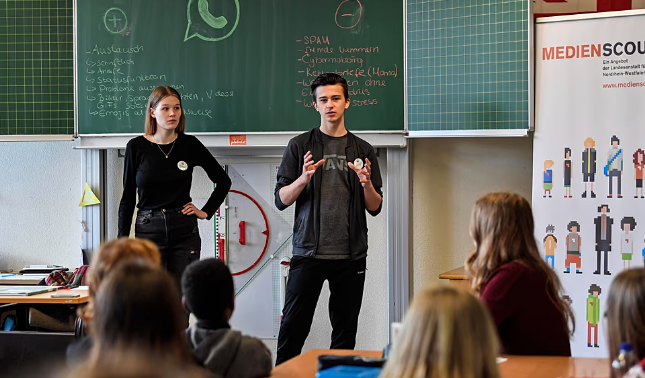
Germany is entering the new school year with a serious shortage of teachers, leaving schools struggling to fill vacancies and maintain regular lessons in several subjects.
The staffing crisis is particularly severe in mathematics, computer science, physics and chemistry. Schools also continue to report shortages in special-needs education, art and music.
According to the latest projection from the Standing Conference of the Ministers of Education and Cultural Affairs, Germany has a calculated shortage of about 27,000 fully qualified teachers. State governments have responded by creating additional positions, recruiting people from other professions and offering financial incentives, but shortages remain widespread.
The situation is especially difficult in some regions. Brandenburg Education Minister Gordon Hoffmann warned in June that the state might not be able to guarantee regular timetables everywhere during the new school year. Rural areas and subjects including biology and chemistry are among those facing particular pressure.
North Rhine-Westphalia is also struggling despite having more than 166,000 teaching positions. More than 7,770 posts remained vacant in the state, according to the latest figures.
Long-term sickness is adding another challenge. In Berlin, 380 teachers had been absent because of illness for at least one year, according to figures from the city’s education administration. The total includes 225 civil servants and 155 salaried teachers among roughly 35,000 teachers employed in the capital.
Eighteen Berlin teachers had reportedly been on sick leave for at least 10 years. Primary schools were the most affected, with 98 teachers absent for extended periods, followed by secondary schools with 54.
Berlin lawmaker Alexander King said staffing shortages were contributing to heavier workloads for teachers who remained in their jobs, potentially increasing pressure on their health.
Other states are reporting similar concerns. In North Rhine-Westphalia, teachers spent an average of 8.43% of working days on sick leave in 2025, higher than the rate across the wider state administration. In Saxony-Anhalt, about 8.6% of lessons were cancelled during the 2024/25 school year because replacement teachers could not be found.
Nationwide comparisons remain difficult because states collect data differently and use varying definitions for long-term illness.
The staffing problem is expected to continue as many experienced teachers approach retirement. Federal statistics show that 35.4% of teachers at general education schools were aged 50 or older during the 2024/25 school year.
At the same time, Germany’s pupil population is expected to rise. The education ministers’ conference projects the number of pupils to increase from nearly 11.2 million in 2024 to almost 11.8 million by 2032.
The combination of retirements, rising pupil numbers and lengthy teacher training means German schools are likely to face staffing pressure for years to come.