

A report published this month by the McKinsey Global Institute offers one of the most rigorous accounts of last year’s trade war. Its verdict confounds almost every prediction made when the tariffs were first introduced.
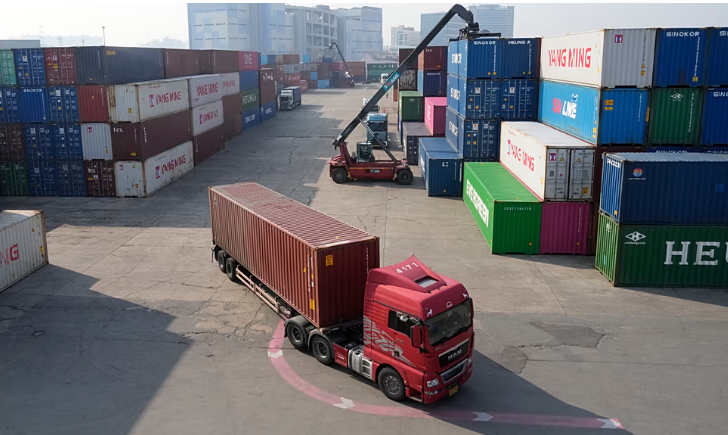
It has been nearly a year since Liberation Day, when US President Donald Trump announced “reciprocal tariffs” on over 50 countries. While the tariffs were expected to cripple global trade, McKinsey’s report, Geopolitics and the Geometry of Global Trade, found that global commerce grew faster than the world economy even as US tariffs hit levels not seen since World War II. Both US imports and Chinese exports reached record highs.
The report found that US–China trade fell by around 30%, with roughly $130 billion in Chinese exports to the US lost, but Southeast Asia stepped in to absorb much of the redirected demand. Exports from Vietnam, Thailand, and Malaysia rose nearly 14%, particularly in consumer electronics. India also captured a portion of the market, increasing smartphone exports to the US by $15 billion after US imports from China fell by $18 billion.
Chinese exporters, meanwhile, pivoted to supply industrial components and capital goods to emerging economies and cut average consumer goods prices by 8% to remain competitive. Despite the tariffs, China’s overall trade surplus reached record levels. The US saw only a marginal reduction in its trade deficit, which stood at $901.5 billion for the year, with the deficit with China narrowing to $202.1 billion but widening elsewhere, notably with Vietnam and Taiwan.
Where the US excelled was in artificial intelligence. The McKinsey report highlights that AI-related goods became the single largest driver of global trade growth in 2025. Semiconductors, servers, and networking equipment accounted for more than a third of trade growth, with the US supplying roughly half of the world’s new data-center capacity. Much of this trade occurred between geopolitically aligned nations, underscoring how AI is reshaping global commerce.
The European Union faced a “double squeeze,” the report found. Imports from China rose while EU exports fell, and EU trade surpluses with the US declined. Automotive exports were hit hardest, with EU shipments to the US down 17% and to China falling over 30%. Meanwhile, Chinese electric vehicles surged into Europe, with Germany importing more cars from China than it exported for the first time.
In response, the EU is pursuing diversification. In January, the European Commission signed agreements with India and Mercosur to reduce tariffs on cars, pharmaceuticals, and other products. On Tuesday, a new free trade deal with Australia was announced, liberalizing flows while maintaining quotas on sensitive agricultural goods.
Tiago Devesa, a co-author of the report, said these agreements represent long-term strategies. “The magnitude of trade with Mercosur and India’s markets today is limited. However, they are very fast-growing markets, and they are complementary to the EU’s products and services,” he told Euronews.
McKinsey’s findings suggest that while the 2025 tariff war reshaped global trade patterns, it did not halt growth. Instead, emerging technologies like AI and shifting supply chains are proving more decisive in driving trade dynamics.