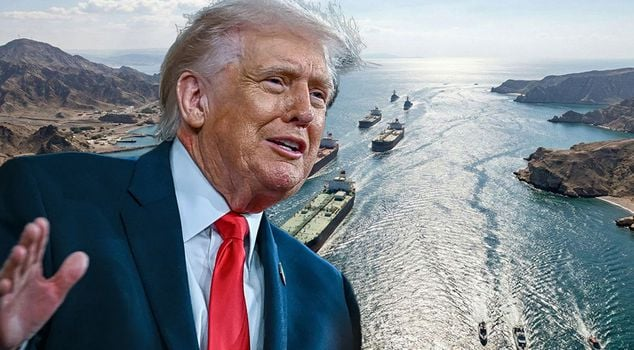
Global oil prices experienced sharp swings on Wednesday after US President Donald Trump announced an extension of the ceasefire with Iran, linking its continuation to progress in peace negotiations and Tehran’s submission of a “unified proposal.”
Brent crude initially eased after the announcement, falling to around $97.60 a barrel in early Asian trading. The decline was short-lived. Prices quickly rebounded, briefly touching $100 a barrel after reports emerged of renewed attacks on vessels passing through the Strait of Hormuz, before settling slightly lower as trading continued.
Markets have remained highly sensitive since the outbreak of the US-Israeli conflict with Iran on 28 February, which triggered retaliatory threats from Tehran and heightened risks to global energy routes. The Strait of Hormuz, a critical chokepoint for global oil flows, has been at the centre of the disruption, with shipping activity increasingly constrained and military tensions affecting passage.
Trump said on Truth Social that the United States would maintain pressure on Iran through continued blockade measures while holding off further military action. He added that Pakistan had requested additional time for negotiations, describing Iran’s political situation as “seriously fractured.”
The initial ceasefire agreement, which had been set to expire on Wednesday evening in Washington, has now been extended indefinitely, though no new timeline has been provided. Uncertainty over the durability of the arrangement has added to market instability.
Vice President JD Vance, who is overseeing US-led negotiations, had been expected to travel to Islamabad for talks, but the White House confirmed the visit has been cancelled. Iranian officials have also said no final decision has been made on whether to attend discussions, citing unresolved concerns over US actions, including restrictions on Iranian ports.
Energy analysts say price movements are being driven less by physical supply and more by shifting expectations around the conflict. Associate professor Jiajia Yang of James Cook University noted that traders are reacting to uncertainty rather than immediate shortages, pointing out that sentiment continues to dominate pricing behaviour.
The Strait of Hormuz normally handles around a fifth of global oil shipments, but flows have been heavily disrupted since Iran restricted access and the United States announced it would intercept vessels linked to Iranian ports. As a result, volatility in energy markets has intensified, with traders closely watching diplomatic developments for signs of either escalation or stabilisation.