


Oil prices fell sharply on Wednesday after US President Donald Trump said negotiations to end the war in the Middle East were progressing, while Iranian officials indicated that “non-hostile” vessels could pass through the Strait of Hormuz.
Brent crude fell by 5% to just under $100 (£74.62) a barrel. US West Texas Intermediate (WTI) also declined amid renewed optimism that tensions in the region could ease.
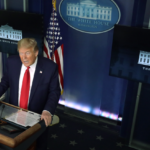
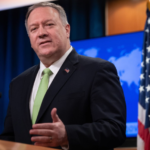
Trump told reporters on Tuesday that discussions were underway and that the parties involved “want to make a deal so badly.” Vice President JD Vance and Secretary of State Marco Rubio were reportedly participating in the talks. Trump also repeated his claim that US and Israeli military actions against Tehran had achieved “regime change” and asserted that Iranian leaders had agreed not to pursue nuclear weapons.
Officials in Tehran strongly disputed these claims. A Foreign Ministry spokesperson, Esmail Baghaei, described reports of talks as “fake news” in an interview with India Today, adding, “Can anyone believe their claims of diplomacy or mediation are credible when they started this war and continue attacking us?”
Earlier reports from The New York Times, Reuters, and Israel’s Channel 12 suggested that Washington had presented a 15-point plan to Iran. According to Channel 12, the plan included reopening the Strait of Hormuz as a free maritime zone and offered the removal of certain sanctions if Iran accepted the proposal. The BBC has not independently verified the document.
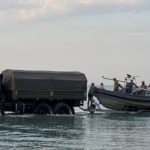
In a statement posted by Iran’s mission to the United Nations, Tehran said “non-hostile vessels” could transit the Strait of Hormuz, provided they coordinate with Iranian authorities and comply with safety regulations. This followed reports that several countries had already negotiated safe passage for their ships despite prior threats from Iran to target vessels attempting to pass through the waterway.
The conflict between Iran and Israel continues, with missile strikes exchanged across the region. The ongoing tension has disrupted global oil supplies, as the Strait of Hormuz is a critical channel, handling roughly 20% of the world’s oil and liquefied natural gas shipments daily.
The latest drop in oil prices was reflected in global markets. Japan’s Nikkei 225 and South Korea’s Kospi each rose by more than 2%, while Australia’s ASX 200 gained 1.8%. China’s Hang Seng and Shanghai Composite indexes climbed by around 1%. European markets also rose, with London’s FTSE 100 up more than 1% and Germany’s DAX up around 1.5%.
Energy executives have warned of the wider economic impact of the conflict. Shell CEO Wael Sawan said supply shortages could hit Europe next month, while BlackRock CEO Larry Fink cautioned that oil prices reaching $150 a barrel could trigger a global recession. Despite Wednesday’s declines, oil remains significantly higher than before US and Israeli strikes began on 28 February.
Governments worldwide are taking measures to mitigate the economic impact of high energy prices, as markets remain sensitive to both military developments and diplomatic efforts in the Gulf.