
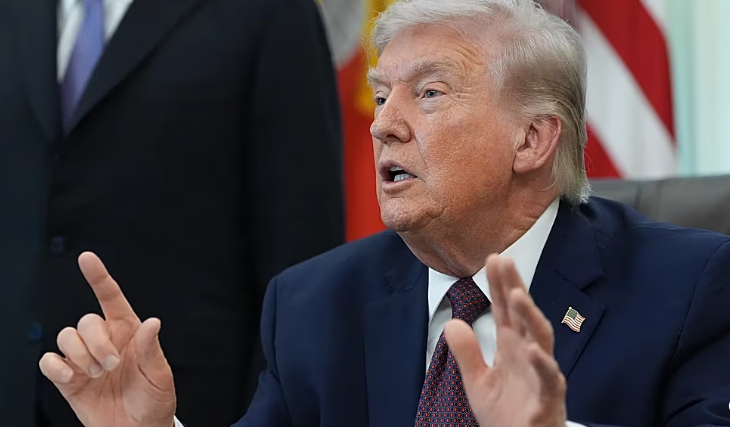
President Donald Trump signed an executive order on Thursday that could impose tariffs of up to 100% on certain patented drugs from companies that do not reach agreements with his administration in the coming months. Companies that have signed “most favoured nation” pricing deals and are actively building production facilities in the United States will be exempt, with a 0% tariff.
For companies without a pricing deal but investing in onshore production, a 20% tariff will apply, rising to 100% within four years if agreements are not reached. A senior administration official told reporters that companies have several months to negotiate before the full tariffs take effect—120 days for larger firms and 180 days for others. The official did not identify specific companies or drugs at risk but said the administration had already reached 17 pricing deals with major drugmakers, 13 of which have been signed.
Trump wrote in the order that the measures were necessary “to address the threatened impairment of the national security posed by imports of pharmaceuticals and pharmaceutical ingredients.” The move comes on the first anniversary of what Trump calls Liberation Day, when he imposed sweeping import taxes on nearly every country, many of which were later overturned by the Supreme Court.
Industry groups quickly voiced concerns. Stephen J. Ubl, CEO of the pharmaceutical trade association PhRMA, said the tariffs “on cutting-edge medicines will increase costs and could jeopardise billions in US investments.” He highlighted that America already has a significant biopharmaceutical manufacturing footprint and that medicines sourced abroad largely come from reliable US allies.
Trump has repeatedly threatened high tariffs on foreign-made drugs but has also used these threats to negotiate lower prices with companies such as Pfizer, Eli Lilly, and Bristol Myers Squibb. The executive order also sets country-specific tariff caps: the EU, Japan, Korea, and Switzerland will face a 15% US tariff on patented pharmaceuticals, while the UK will see 10%, with plans to reduce to zero under future trade agreements. The UK has previously secured a 0% tariff for British medicines exported to the US for at least three years.
In addition to drug tariffs, Trump updated duties on imported steel, aluminium, and copper. Starting Monday, tariff rates will be based on the “full customs value” of metals as paid by US buyers. Products entirely made of these metals will remain subject to a 50% tariff, while derivative products containing less than 15% metal will face country-specific rates, and those with higher metal content will be subject to a 25% tariff on total value.
Trump’s latest orders continue his use of sector-specific import duties under Section 232 of the 1962 Trade Expansion Act. The approach follows a Supreme Court ruling in February that struck down his broader import taxes under the 1977 International Emergency Economic Powers Act. Analysts expect further product-specific tariffs as Trump continues to target imports to reduce the trade deficit, encourage domestic manufacturing, and influence trade partners.
These measures come amid rising concerns over global supply chains, with businesses and households already coping with higher prices due to tariffs and other trade disruptions.