


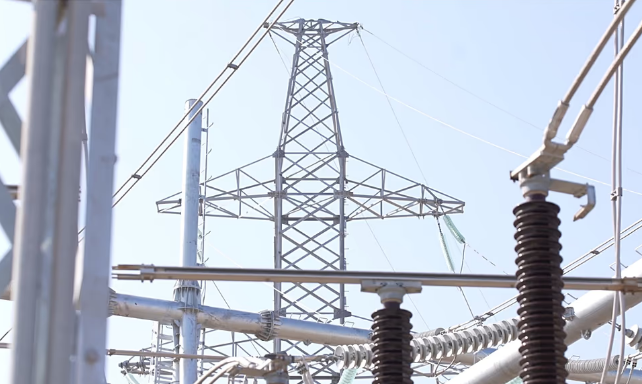
Uzbekistan is embarking on a major expansion of its electricity sector, aiming to increase annual power generation from 82 billion kilowatt-hours to more than 120 billion kilowatt-hours over the next five years as the country responds to rising demand from industry, population growth and emerging digital industries.
The ambitious target highlights the government’s drive to strengthen energy security while gradually reducing dependence on fossil fuels. Officials see the power sector as a key area for investment, with renewable energy, electricity transmission and nuclear power expected to play central roles in the country’s long-term strategy.
Speaking at the Tashkent International Investment Forum, President Shavkat Mirziyoyev said renewable sources are expected to generate 54% of Uzbekistan’s electricity by 2030. He noted that the country has already attracted nearly $6 billion in foreign investment for green energy projects and plans to invest another $4 billion in modernising electricity transmission networks.
Mirziyoyev also encouraged investment in solar and wind farms, battery energy storage systems, upgraded power grids and green-powered data centres, linking energy development with Uzbekistan’s industrial and digital transformation goals.
International financial institutions are already backing several major projects. In 2025, the European Bank for Reconstruction and Development (EBRD) invested nearly $2 billion across 120 projects in Central Asia and Mongolia, with more than $1 billion directed toward Uzbekistan. More than half of the bank’s regional investments were classified as green initiatives, while about one-third supported sustainable infrastructure.
Among its projects in Uzbekistan is a $142 million financing package for a combined one-gigawatt solar photovoltaic plant and a battery storage system with a capacity of 1,336 megawatt-hours, developed alongside ACWA Power. The EBRD has also arranged financing of up to $195.5 million for a 300-megawatt solar facility and a 75-megawatt-hour battery storage project being developed by Masdar in the Kashkadarya region.
EBRD Managing Director for Central Asia and Mongolia Huseyin Ozhan said expanding energy capacity requires both financial investment and policy reforms. He said governments across the region have adopted long-term decarbonisation plans, with international institutions helping develop roadmaps to reduce reliance on fossil fuels.
Ozhan said renewable energy remains the primary pathway for lowering carbon emissions while meeting growing electricity demand. He added that modern energy systems require not only new power plants but also battery storage, stronger grid connections and supportive regulations to attract private investment.
Alongside renewable energy, Uzbekistan has begun developing its first nuclear power project. Construction started in June in the Jizzakh region, where the planned facility will feature two large reactors with capacities of about 1,000 megawatts each, along with two small modular reactors of around 55 megawatts.
World Nuclear Association Director General Sama Bilbao y León said the project reflects a broader trend among rapidly growing economies seeking dependable low-carbon electricity. She noted that about 75% of Uzbekistan’s electricity currently comes from natural gas and said nuclear power will help diversify the country’s energy mix while allowing greater use of natural gas in other sectors of the economy.