

A family car trip from north to south France has demonstrated the length of the country’s electric vehicle charging network, as well as the real-life issues faced by drivers in the heat of summer on long journeys.
One family chose to replace their old petrol car with a second-hand electric Volkswagen ID.4 before travelling the 1,250km from Cherbourg to Montauroux, near Nice, for holidays. The journey is approximately 12 hrs. drive, which was split up into 2 days with an overnight stay.
Prior to traveling, the family looked up charging services and thought it would mostly use two popular charging services. However, on the road, they found that it was difficult to avoid using multiple charging providers, so they would end up with six different mobile apps to access charging stations and charging systems.
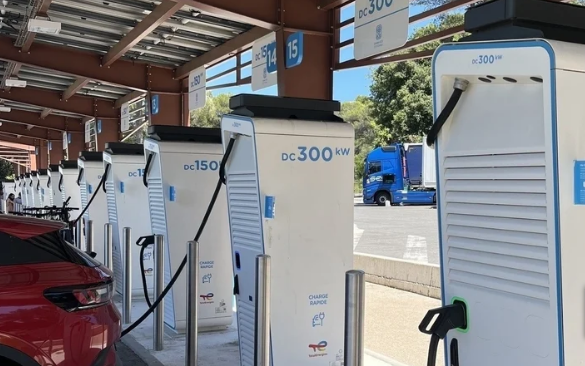
Although the inconvenience of dealing with multiple applications was a drawback, the charging infrastructure performed well. High speed charging stations were easily accessible throughout France’s motorway system and were typically one every 75-100 kilometres. The majority of chargers provided sufficient charge to enable the car to resume the journey in about 30-40 minutes.
Supermarkets also had charging facilities, but many of these had lower charging speeds than motorway stations.
Charging costs were competitive with Ireland. One charging provider was one of the cheapest providers, as the family paid around €0.44 per kWh by subscribing to a monthly plan. Other operators offered charging prices between €0.50 and €0.58 per kWh which were also lower than current public charging prices in Ireland.
There was one technical problem which was when the vehicle did not disconnect itself from a charging station. The staff called the customer service number of the operator and in a matter of minutes, they released the charging cable remotely and saved the trip from being disrupted.
The trip back was a new experience with a serious heat wave throughout France. The heat (38C to 42C) caused the family to depart a day earlier than planned and the need to run the vehicle’s air conditioning system all the way to keep the passengers and their dog comfortable. Climate control was used throughout the year, which led to less driving range and more stops for charging.
Mobile phones were also impacted by high temperatures and put a strain on them as drivers were using their phones for charging applications and to find charging stations.
Motor way tolls were still a large expense in France. There is a zero discount for EVs and drivers are charged the same toll fees as petrol and diesel vehicles.
Between Cherbourg and Montauroux, the family paid €269 for the electricity used on the trip down and back, and would have spent an estimated €308 on petrol for the same trip. The tolls on the motorway cost an extra €257.
The test showed that it is becoming increasingly viable to make long journeys by electric vehicles in France, due to the increasing network of charging stations, but a precise itinerary is still necessary, especially in extreme summer weather.