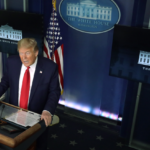


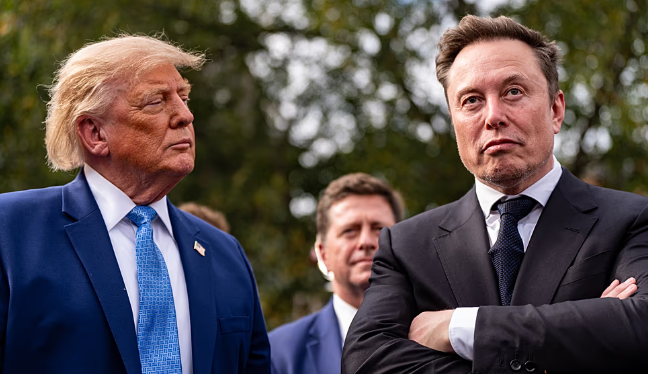
US President Donald Trump spent hours questioning Elon Musk’s artificial intelligence chatbot Grok during a private White House meeting in December 2025, including asking how Venezuelans might react if US forces captured President Nicolás Maduro, according to a report by Time magazine.
The meeting took place when tensions between Washington and Caracas were rising sharply. Time reported that Musk visited the White House for a private meeting with Trump, who asked Grok about his presidency and political legacy as well as the possible consequences of action against Maduro.
An official who was present at the meeting told Time that Grok described Maduro as a repressive and deeply unpopular leader and indicated that many Venezuelans would probably welcome his removal.
US forces subsequently captured Maduro in January 2026, after which large crowds celebrated across Venezuela, according to the report. Trump reportedly emerged from the earlier encounter with a highly favourable view of Grok’s capabilities.
The reported meeting came months after Musk left his role at the Department of Government Efficiency, or DOGE, in May 2025. The extent to which the discussion influenced subsequent US policy toward Venezuela remains unclear.
At the time of the meeting, the Trump administration was conducting Operation Southern Spear against suspected drug trafficking networks and had imposed increasing pressure on the Venezuelan government. Washington also designated Maduro’s government as a Foreign Terrorist Organization, while US officials were reportedly preparing plans for a possible political transition in Venezuela.
Time’s account raises questions about the role AI systems may have played in discussions surrounding major foreign policy and national security decisions. There is no public evidence establishing that Grok’s responses directly determined the administration’s decision to act against Maduro.
The US government has expanded its use of artificial intelligence during Trump’s second term. Google’s Gemini and Musk’s Grok have been used in some public-sector applications, while AI systems have also been adopted for defence-related purposes.
OpenAI’s ChatGPT, Meta’s Llama and Anthropic’s Claude have received approval for certain uses within the US government.
Musk has also returned to a formal government role. On Wednesday, US Defence Secretary Pete Hegseth named Musk, Anduril founder Palmer Luckey and former Republican House Speaker Newt Gingrich as co-leaders of a Pentagon study examining the future of warfare.
The appointments have drawn attention because Musk and Luckey lead companies that have substantial defence interests. Musk’s SpaceX is involved in developing satellite infrastructure for Trump’s planned Golden Dome missile defence system.
Musk has also been supporting Republican candidates ahead of the November midterm elections, spending millions of dollars to help the party retain control of Congress.
The developments have placed renewed focus on the expanding relationship between technology companies, AI systems and the US government, particularly as artificial intelligence becomes more widely used in public administration and defence.