


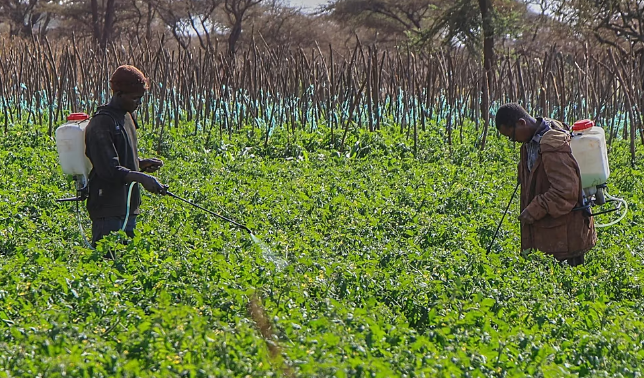
Nearly half of the world’s farmers and farmworkers are affected by acute pesticide poisoning each year, according to a new study highlighting the continuing health risks associated with agricultural chemicals.
Researchers estimate that between 402 million and 433 million cases of acute pesticide poisoning occur among farmers and agricultural workers worldwide every year. The findings were published in Frontiers in Public Health and point to a major public health problem affecting people who work directly with pesticides.
The study estimates that around 46% of the world’s farming population experiences pesticide poisoning annually. There are approximately 934 million farmers worldwide, meaning hundreds of millions of workers could be exposed to harmful effects from pesticides each year.
The researchers also found that pesticide use has continued to increase despite decades of international efforts to reduce the health and environmental risks associated with these chemicals. Global pesticide consumption has doubled since 1990, reaching about 3.8 million tonnes in 2023.
Susan Haffmans of Pesticide Action Network Germany, which commissioned the report, said agricultural workers should not have to accept illness as a consequence of producing food.
Southern Asia was identified as the region with the highest burden of pesticide poisoning, followed by Southeast Asia and East Africa. Burkina Faso recorded the highest national rate, with nearly 84% of farmers estimated to experience poisoning each year.
Europe was the only major region where pesticide consumption declined compared with 1990 levels. Researchers linked the reduction to stricter regulations governing pesticide use.
The study estimated that annual deaths from pesticide poisoning in Europe remain relatively low, ranging from around two in Western Europe to about 60 in Eastern Europe. However, non-fatal poisoning continues to affect large numbers of agricultural workers.
Southern Europe recorded an estimated poisoning rate of 32%, representing more than 1.5 million cases each year. Rates were considerably lower in Western and Eastern Europe, at about 6%.
Researchers warned that the figures for Eastern Europe should be treated cautiously because available data are limited. Hungary is currently the only country represented in the study’s regional estimates, meaning the actual scale of pesticide poisoning could be higher.
The researchers call