

The United Kingdom is planning tougher penalties for people who deliberately damage critical underwater infrastructure, including prison sentences of up to 14 years and unlimited fines. However, industry experts warn that stronger laws alone will not protect Europe’s submarine networks from disruption.
The proposed legislation aims to update laws dating back to 1885, introduce new security obligations for cable operators and give the government greater powers to respond to national security threats.
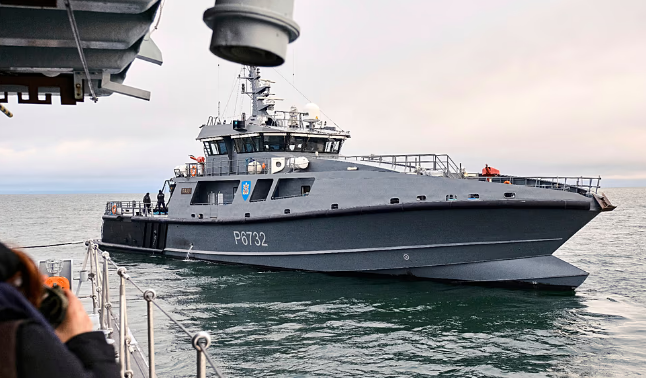
The plans come amid growing concerns about suspicious Russian activity around critical infrastructure in European waters.
“The threats we face have changed dramatically, with suspicious Russian activity around critical undersea infrastructure,” said Ian Murray, the UK’s telecoms minister.
The government is responding to a series of incidents involving underwater infrastructure, including the sabotage of the Nord Stream pipelines in 2022, damage to the Balticconnector gas pipeline in 2023 and several submarine cable failures in the Baltic Sea in 2024.
The importance of these connections extends well beyond Europe. Submarine fibre-optic cables carry around 99% of intercontinental internet traffic, according to a 2025 report by the European Commission’s Joint Research Centre. They support services ranging from emails and video calls to international banking and financial transactions.
Damage to a cable does not necessarily cause a complete internet outage because data can often be redirected through alternative routes. However, increased traffic on backup connections can reduce network capacity and disrupt services such as online payments and banking.
Industry calls for greater route diversity
While the UK government believes tougher penalties could deter sabotage, network operators say investment in genuinely independent routes is essential.
Tony O’Sullivan, chief executive of international network operator RETN, which carries data across Europe, Asia and North America, warned that installing additional cables along existing routes does not necessarily improve resilience.
He described the practice as “fake diversity”, explaining that several cables may share the same landing stations or narrow seabed corridors. A single incident could therefore damage multiple connections.
The threat is not limited to deliberate attacks. According to the International Cable Protection Committee, between 150 and 200 submarine telecommunications cable faults occur worldwide each year. Around 70% to 80% result from accidental human activity, mainly fishing operations and ships dragging anchors.
O’Sullivan said investment was needed in alternative routes both underwater and on land, even though building separate connections would cost more. Such infrastructure could reduce the risk of one incident disrupting several networks simultaneously.
European investment and surveillance
Other European countries are also strengthening protection. Denmark is developing surveillance capabilities to monitor underwater cables and pipelines and identify potential threats.
In February 2026, the European Commission announced €347 million for strategic submarine cable projects, including €20 million to improve repair capabilities in the Baltic Sea.
The UK government is consulting on its proposed legislation until January 14, 2027. Responses will help shape the final rules.