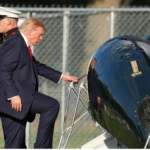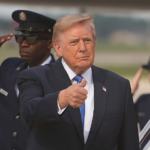
Oil prices pulled back sharply on Tuesday, retreating around 4% from the previous day’s highs as investors reacted to renewed optimism over US-Iran negotiations following comments from US President Donald Trump suggesting diplomatic progress is underway.
Crude had surged earlier in the week after Iran announced a suspension of talks with Washington and warned of potential action to close the Strait of Hormuz, a critical shipping route for global energy supplies. The developments initially sparked fears of a wider escalation in the Middle East conflict, pushing oil prices higher and rattling financial markets.
By mid-session, however, those gains had reversed. US benchmark West Texas Intermediate (WTI) fell to around $91.30 per barrel, while Brent crude dropped to approximately $97.20, both down about 4% from Monday’s peak levels.
Market sentiment shifted after Trump stated that discussions with Iran were continuing at a “rapid pace” and suggested that diplomatic channels remained open despite rising tensions. He also said he had spoken with Israeli leadership and representatives linked to Hezbollah in an effort to reduce tensions in Lebanon, where clashes have added to regional instability.
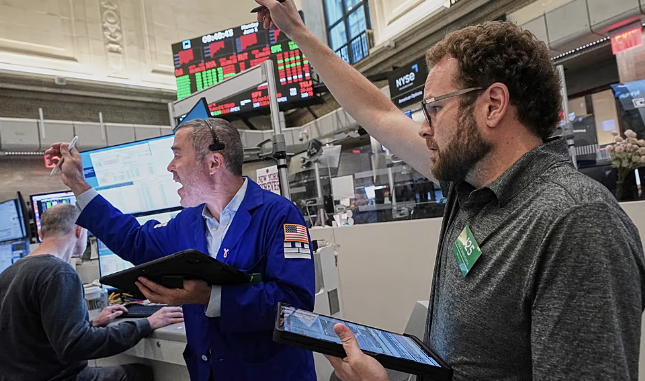
The perceived easing of geopolitical risk helped lift broader investor confidence across global equities. European markets opened higher, with the Euro Stoxx 50 and the Stoxx 600 both gaining around 0.9% in early trading. Major indices across the region also advanced, including Germany’s DAX, France’s CAC 40, Italy’s FTSE MIB, and the UK’s FTSE 100, which rose between 0.6% and 1%.
US markets showed mixed sentiment at the open. The S&P 500 edged slightly lower, while the Nasdaq 100 posted a marginal gain as futures remained broadly stable earlier in the day.
In Asia-Pacific markets, equities largely moved higher overnight. South Korea’s Kospi surged around 2.6%, continuing its strong upward momentum and briefly touching record levels, driven in part by sustained strength in the technology sector. Japan’s Nikkei 225, however, slipped around 0.5%.
Elsewhere in the region, Australia’s S&P/ASX 200 rose 0.7%, Hong Kong’s Hang Seng Index climbed 2.5%, and China’s CSI 300 advanced 1.5%, reflecting broad-based risk appetite across Asian markets.
Analysts noted that South Korea’s rally continues to be supported by artificial intelligence-related optimism, which has helped the index outperform broader geopolitical uncertainty affecting other global markets.
Overall, the reversal in oil prices and the simultaneous rebound in equities highlighted how quickly sentiment remains tied to signals from diplomatic developments, particularly those involving energy security and Middle East stability.