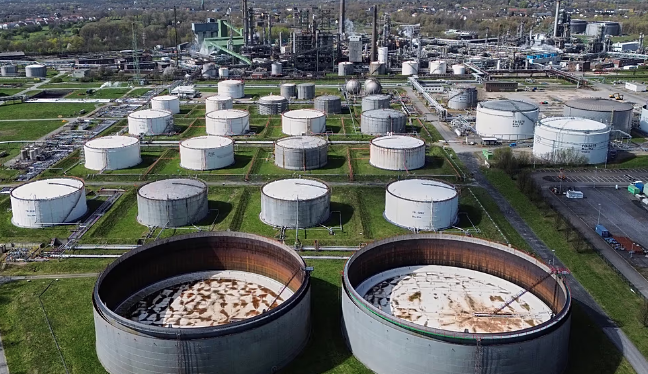
European motorists could face persistently high petrol and diesel prices as tight refining capacity, low fuel inventories and disrupted international trade keep pressure on the market.
Oil prices have moved sharply in recent months as hopes for peace between Iran and the United States have shifted. Brent crude, the international benchmark, has traded between roughly $73 and $126 a barrel since the end of February and stood at about $95 on Friday.
However, crude prices are only part of the story. European fuel costs are also being driven by the availability of refined products, particularly diesel.
Petrol and diesel still dominate Europe’s passenger car fleet despite the growing popularity of electric vehicles. Data from the European Automobile Manufacturers’ Association shows that petrol cars account for 49.2% of vehicles on EU roads, while diesel represents 38.4%. Together, they make up 87.6% of the fleet.
Fuel prices remain close to record levels despite temporary tax cuts and other government support measures introduced in some European countries following the energy crisis.
During the week beginning August 31, petrol averaged €1.95 per litre across the EU, according to the European Commission’s Weekly Oil Bulletin. That was around 4% below the June 2022 peak of €2.03. Diesel averaged €2.04, roughly 3% below its record of €2.11 reached in April 2026.
Analysts say the main problem is increasingly the shortage of refined fuel rather than crude oil itself.
“Crude may be available, but the capacity to convert it into the right products, particularly diesel, has become much tighter,” said Sumit Ritolia, lead analyst for refining supply and modelling at Kpler.
Europe has become heavily dependent on imported diesel and jet fuel since Russia’s invasion of Ukraine disrupted established supply routes. Supplies from the United States, India and the Middle East have filled part of the gap, but conflicts and attacks on refineries have placed additional strain on global markets.
European inventories are also low. Petrol stocks in the Amsterdam-Rotterdam-Antwerp trading hub fell to 752,000 tonnes in late August, their lowest level since September 2021, according to Insights Global.
Refineries in Europe and the United States are operating at high rates, leaving limited spare capacity if another disruption occurs. Autumn maintenance could add to the pressure, while hurricanes could threaten refinery operations along the US Gulf Coast.
Petrol prices may ease as summer driving demand declines and production switches to cheaper winter fuel. Diesel is more vulnerable because winter demand and tighter fuel specifications could keep margins high into the colder months.
Higher exports from India and China could offer some relief, but analysts say sustained additional supplies will be needed.
A reopening of the Strait of Hormuz and a recovery in Middle Eastern fuel exports could quickly lower crude prices. Yet diesel prices may take longer to fall as inventories need to be rebuilt and refined-product supplies restored.