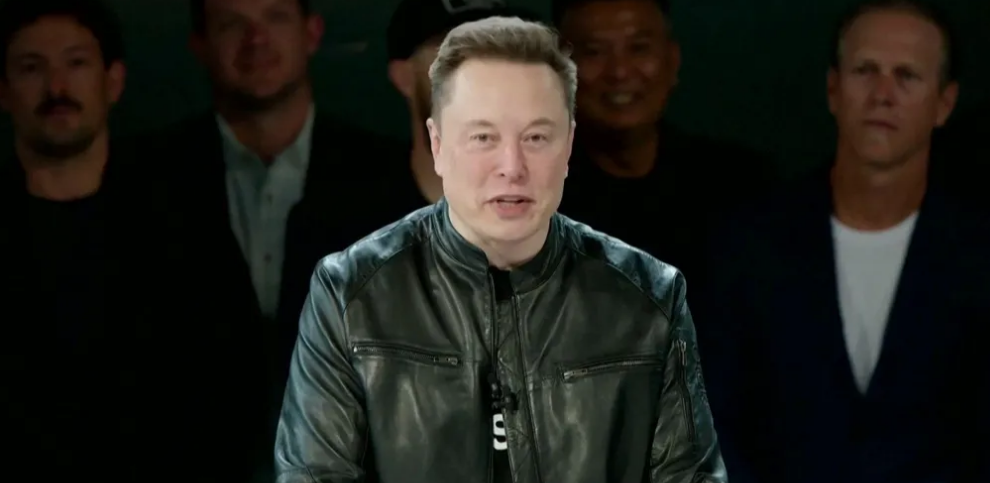
Elon Musk’s emergence as the world’s first trillionaire has triggered intense global debate over wealth concentration, political influence, and the future shape of economic power.
The milestone, driven largely by soaring valuations of Tesla and SpaceX, places Musk’s estimated fortune on par with the entire annual economic output of countries such as Poland or Switzerland. While much of his wealth remains tied to paper valuations rather than liquid assets, the scale of his holdings has already made him one of the most influential and controversial figures in global politics and business.
Musk’s political footprint has expanded alongside his financial rise. He has contributed hundreds of millions of dollars to US President Donald Trump’s re-election campaign after previously criticising the administration. He also briefly headed the Department of Government Efficiency, a role in which he oversaw aggressive spending cuts, including the closure of the US Agency for International Development (USAID). Some researchers cited in The Lancet have warned that the resulting reductions in aid could contribute to more than 14 million additional deaths by 2030, though these projections remain disputed.
Beyond the United States, Musk has increasingly weighed in on political debates in Europe, including in the United Kingdom, where he has clashed with Prime Minister Sir Keir Starmer. His comments have frequently focused on immigration and cultural tensions, drawing both criticism and support from political groups across the spectrum.
In Washington, several lawmakers reacted sharply to the trillionaire milestone. Senators Bernie Sanders and Elizabeth Warren argued that such extreme concentration of wealth highlights systemic inequality and strengthens the case for higher taxation on ultra-wealthy individuals. Warren described it as a “wake-up call” for global policymakers.
Despite the headline figure, analysts note that Musk’s wealth is largely theoretical. It is tied to stock in Tesla and SpaceX, with restrictions limiting his ability to sell large portions of his holdings. SpaceX shares in particular remain illiquid, and much of its valuation is based on future growth expectations rather than current profitability.
SpaceX itself continues to operate at a loss, with financial filings indicating multibillion-dollar deficits in recent years as the company invests heavily in satellite networks, artificial intelligence systems, and space infrastructure. However, investors remain optimistic about long-term returns, contributing to its record-breaking valuation and recent public offering success.
The company’s rapid expansion has also created thousands of new millionaires among employees and early investors, reinforcing the broader economic impact of Musk’s ventures even as debate grows over the social consequences of such concentrated wealth.
For supporters, Musk represents technological ambition at unprecedented scale. For critics, his rise underscores deepening inequality and the increasing overlap between corporate power and political influence.