


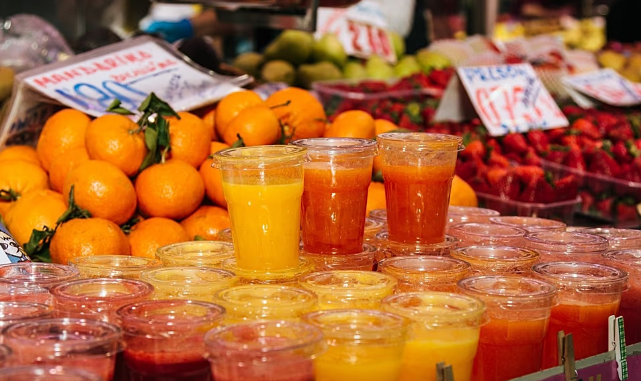
Across Europe, many people continue to fall short of recommended daily fruit and vegetable intake, raising fresh debate over whether fruit juice and smoothies could help close the gap.
Health authorities advise consuming at least five portions of fruit and vegetables each day, yet data from 2023 shows Europeans averaged just 351 grams daily. That remains below the World Health Organization’s recommended 400 grams, highlighting a persistent nutritional shortfall across the region.
Researchers from Newcastle University in the United Kingdom have examined whether fruit juice or smoothies could play a role in improving intake. The study comes amid rising concerns over cost of living pressures and food waste, which can make fresh produce harder to access or maintain for many households.
Dr Oliver Shannon, lecturer in Nutrition and Ageing and senior author of the study, noted that affordability remains a major barrier. He said many people struggle to increase fruit consumption because fresh produce can be expensive and spoils quickly.
To test possible solutions, researchers conducted a small trial involving three groups. One group consumed five portions of whole fruits and vegetables daily for four weeks. A second group supplemented their diet with fruit juice, while a third continued their usual eating habits.
Both intervention groups showed higher overall fruit and vegetable consumption compared with the control group. Researchers also reported improvements in self-reported mood and reduced symptoms of depression among participants in both groups, although they stressed the findings were preliminary due to the study’s limited size.
Shannon said even simple dietary changes, including a daily glass of 100 percent fruit juice, could contribute to better nutrition and potentially support mental wellbeing. He emphasised that the juice used in the study contained no added sugar, preservatives, flavourings or colourings.
Co-author Dr Courtney Neal said participants were more successful in improving their diets when given financial and educational support. She suggested that small, practical interventions could help people meet recommended intake levels.
However, nutrition experts continue to caution against relying heavily on juice. Most national dietary guidelines across Europe limit its role in daily fruit intake due to its lower fibre content and higher natural sugar concentration compared with whole fruit.
Guidance varies between countries. In the United Kingdom, up to 150 millilitres of fruit juice per day may count as one portion of the recommended intake. Germany allows occasional consumption in place of fruit, but advises limiting intake. France excludes fruit juice from fruit portions entirely, while Denmark includes it within its guidelines but recommends a higher daily total of six portions.
Despite these differences, health authorities broadly agree that whole fruit remains the preferred option due to its fibre, vitamins and antioxidants. These components are reduced during juicing, which can also affect how filling the food is and how the body processes sugar.
Some earlier research has linked frequent juice consumption to lower satiety and disrupted sleep patterns, raising further questions about its role in long-term dietary health.
As Europe continues to grapple with nutritional shortfalls, researchers say fruit juice may offer a partial solution, but stress that it cannot replace the benefits of whole fruit in a balanced diet.