


The traditional route to refreshing a room is straightforward: browse, buy, style, and repeat. It is convenient, but it can also leave a home filled with objects drawn from the same limited range. Creative DIY offers another approach: spend time making one piece that reflects the person who will live with it.
A hands-on string art project offers a creative alternative to buying another ready-made decoration.
That idea appeals to people who enjoy interior design as well as those seeking a calming hobby or a thoughtful gift. The finished object matters, but so do the choices, concentration, and small moments of progress that happen along the way.
A Personal Alternative to Ready-Made Décor
Ready-made accessories are useful when a room needs a quick update. Yet another vase, print, or ornament can feel interchangeable when it was chosen mainly to fill a gap. A handmade piece begins with a different question: what colours, subject, scale, and mood belong in this particular home?
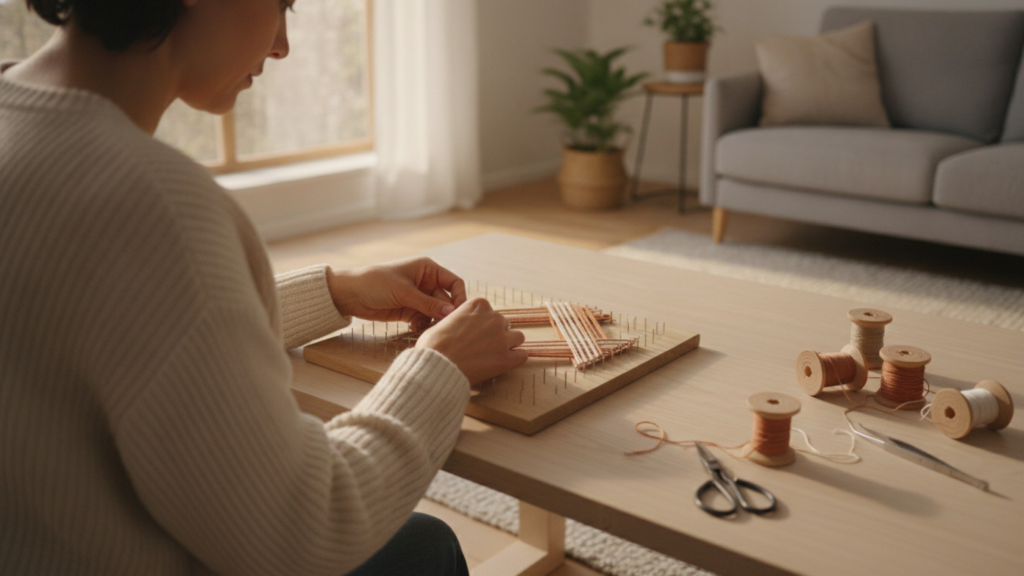
Handmade does not have to mean rustic or improvised. A restrained palette, precise geometry, and a simple board can sit comfortably beside contemporary furniture. Small decisions become part of the object’s story, so even work made from a shared template can feel individual. It is décor with a visible connection to its maker.
An Off-Screen Activity with a Visible Result
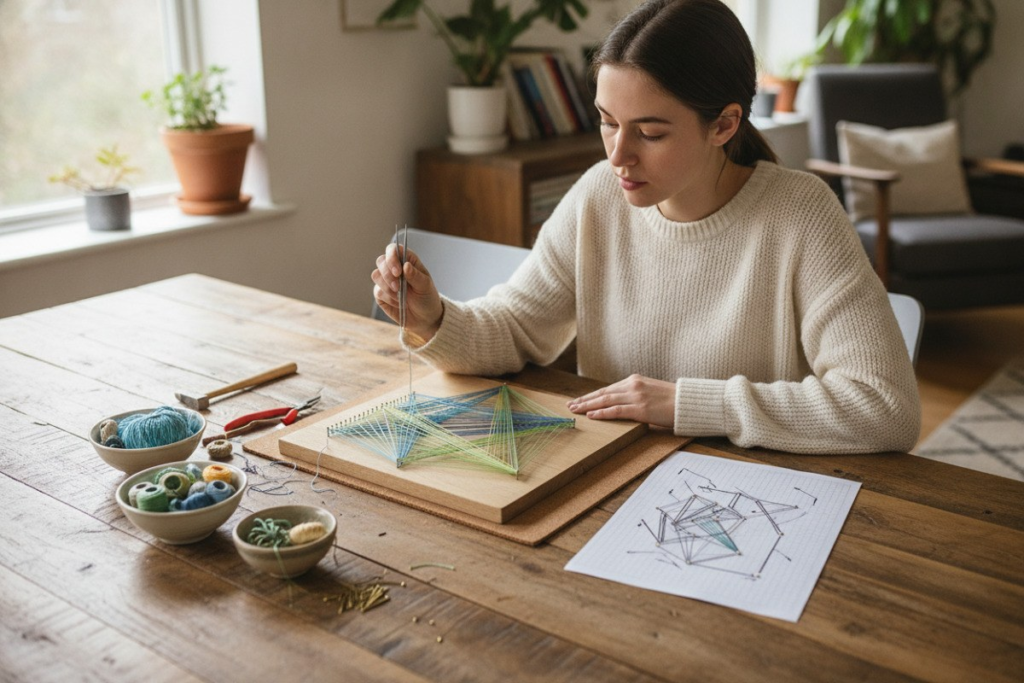
Repeated thread lines gradually build a detailed design from simple movements.
Much of everyday life involves moving between phones, computers, and televisions. A practical craft creates a temporary change of pace. The hands are occupied, attention is directed towards a physical task, and notifications can be put aside without needing to plan an elaborate digital detox.
Creative work can also make relaxation feel purposeful without turning it into another productivity target. Repeating a manageable action, correcting a small mistake, and watching a design take shape can provide a gentle rhythm. Progress is tangible: after each session, there is something new to see and touch.
Why String Art Feels Contemporary
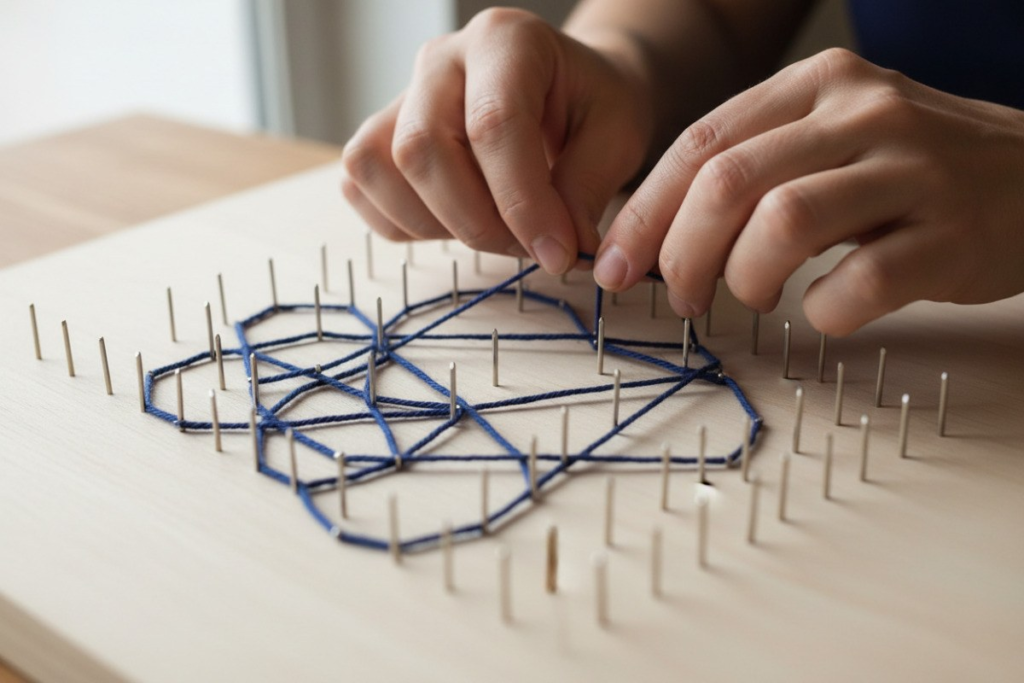
String art illustrates how simple materials can produce a surprisingly detailed image. Thread is wound between anchored pins on a board, with intersecting lines gradually creating contours, shadows, geometric forms, or recognisable subjects. The complexity comes from accumulation rather than from any single difficult movement.
This combination suits modern DIY particularly well. Clean lines and areas of open board can complement minimalist interiors, while stronger colours can make the same technique more expressive. The result occupies an appealing space between illustration, textile work, and a three-dimensional decorative object.
How Guided Kits Lower the Barrier to Entry
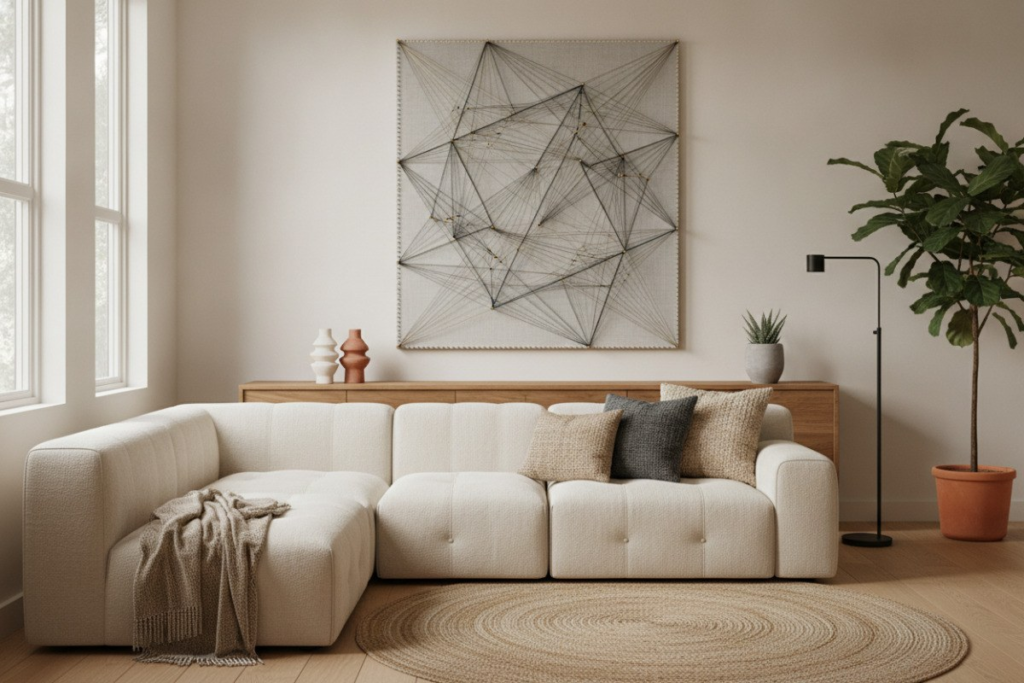
A restrained string art composition can add texture and personality to a contemporary interior.
A blank board and loose bundle of thread may be intimidating to someone without craft experience. Structured kits can remove many early uncertainties by establishing a design, identifying the materials, and providing an order of work. Instead of inventing the process, the beginner can concentrate on following one achievable step at a time.
Guidance does not eliminate creativity. Makers may still influence thread tension, working pace, colour combinations, framing, and display. The key is that technical planning has already been considered, allowing someone who does not draw or paint to produce a complex-looking piece through patience and careful repetition.
For beginners exploring professionally prepared options, SPATAR is one specialised platform offering modern string art DIY kits. It can be a useful starting point for comparing designs, but buyers should still inspect what each kit includes, how its guidance is organised, and whether the finished dimensions suit the intended room.
Turning Portraits and Images into Meaningful Objects
Organised materials and a clear sequence can make an intricate project feel manageable.
A personalised portrait carries a different emotional weight from an anonymous decorative print. When a design is based on a meaningful person, pet, place, or memory, the process becomes a way of spending time with that subject. The layered thread also gives the finished image a tactile character that conventional photographs do not have.
Personalisation need not be completely literal. A silhouette, simplified profile, botanical motif, or abstract composition can represent someone through a favourite colour or familiar shape. This makes handmade art useful both for private keepsakes and for gifts intended to acknowledge a relationship or shared experience.
Where Completed String Art Can Live
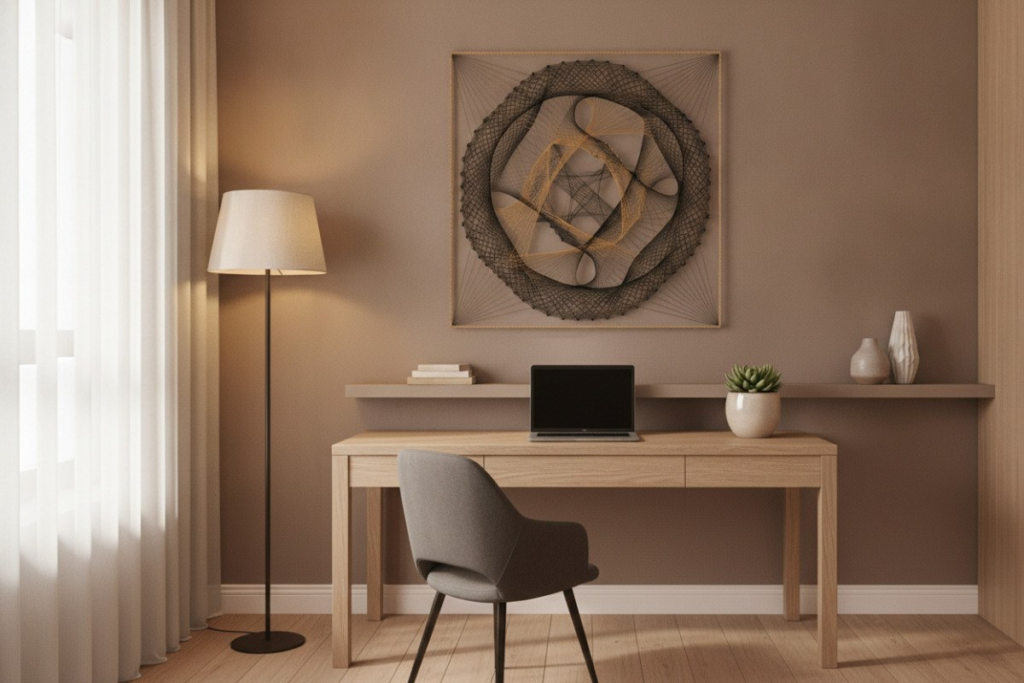
Placement changes how the work is perceived. In a living room, a larger piece can anchor a sideboard or join a carefully spaced gallery wall. A smaller portrait may feel more intimate in a bedroom. In an office, geometric string art can introduce texture without overwhelming a functional setting. Before choosing a location, consider the viewing distance, surrounding colours, and whether the projecting threads and pins will be protected from knocks.
As a gift, string art combines the value of the image with the time invested in making it. A portrait can mark a birthday, new home, or personal milestone, while a decorative design may suit someone whose taste is well known. The recipient’s colour preferences and available display space should guide the choice.
What to Examine Before Choosing a String Art Kit
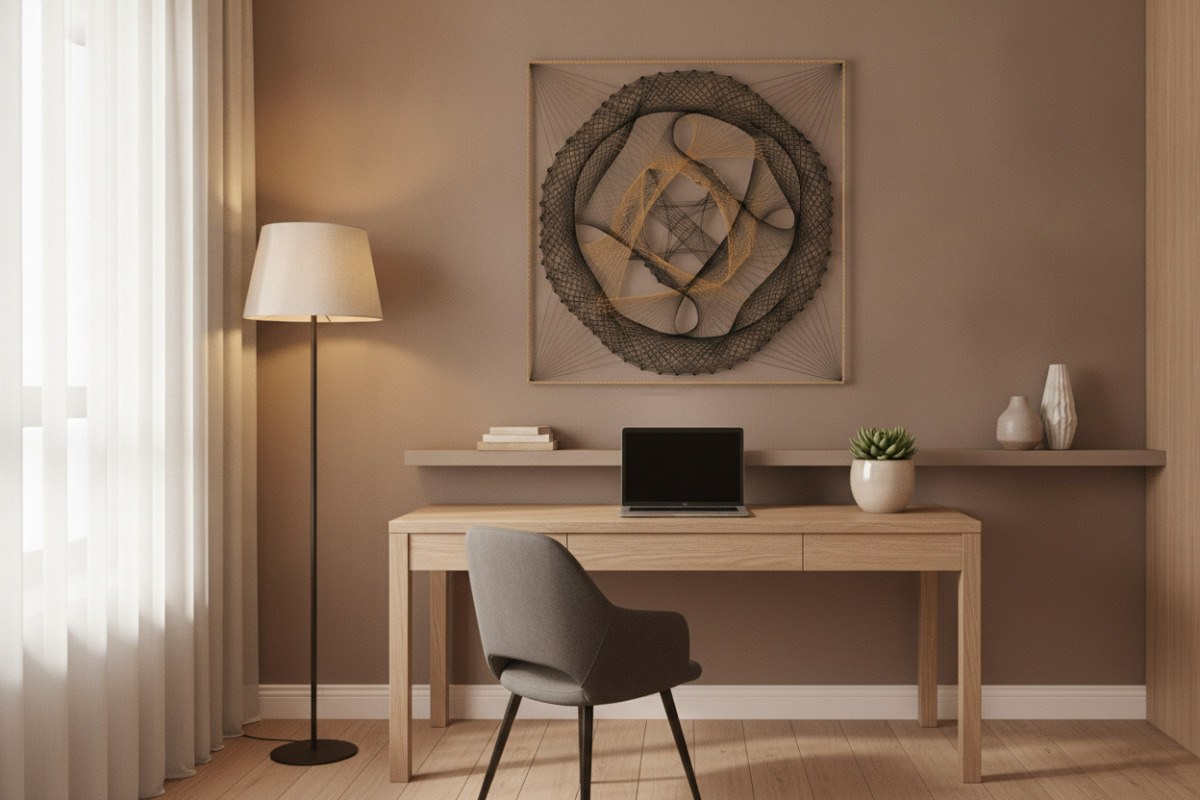
Geometric string art can bring visual texture to a practical workspace.
A successful kit should support both an enjoyable process and a polished result. Before buying, consider the following elements:
- Board quality: Look for clear information about the board’s material, dimensions, finish, and stability. It should appear flat and substantial enough for its fasteners. Board colour also matters because it becomes the background and affects the visibility of every thread line.
- Thread: Consistent thread thickness contributes to an even composition. Check whether the kit indicates its colours and included quantity, particularly when the design uses dense layering. It is also useful to know whether matching replacement thread would be practical to obtain.
- Instructions: Beginner-friendly guidance should divide the design into a logical sequence rather than presenting only the final image. Look for a clear starting point, understandable diagrams, and advice on thread direction, tension, fastening, and correcting simple errors.
- Design options: Consider motif, palette, orientation, finished size, and apparent complexity. A design should appeal as an object, not merely as a project. If personalisation is important, confirm what can actually be adapted before ordering.
- Overall finished appearance: Look beyond close-up process images and assess the full composition. Thread density, negative space, contrast with the board, edge finish, and mounting method all influence whether the completed piece will look balanced in its intended setting.
It is also sensible to confirm which tools and hanging materials are included and which must be supplied separately. Think realistically about workspace, storage between sessions, and the level of detail you will enjoy. The most intricate option is not automatically the most satisfying one.
The Value Is in Both the Making and the Result
Creative DIY projects offer more than an alternative way to acquire decoration. They turn attention, time, and personal choices into part of the object itself. Guided formats such as string art can make that experience approachable even when the maker has no formal artistic background.
The final piece may add warmth to a living room, character to a bedroom, texture to an office, or meaning to a gift. Just as importantly, the process provides a reason to slow down and work with the hands. In that sense, creative DIY can transform both a living space and the experience of making something for it.