

Gyirong Port, once a busy border crossing between China and Nepal, has been almost completely destroyed after a massive landslide and flood swept through the area, leaving hundreds of people missing on the Chinese side.
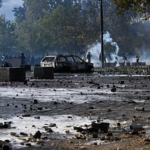
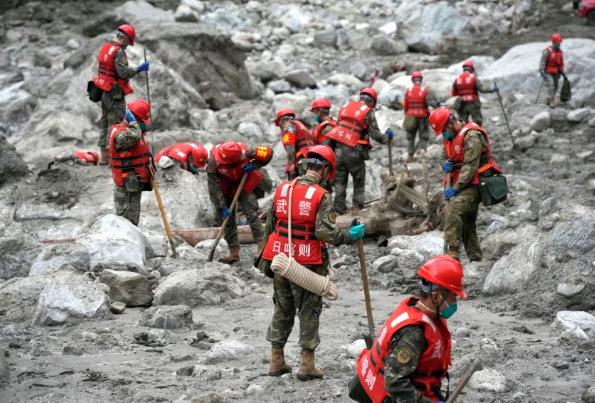
The high-altitude border hub has been reduced to a field of rocks, gravel, mud and debris. Emergency teams continue searching the unstable site, where the remains of the former checkpoint are barely visible.
The disaster struck on August 26 when a huge surge of water hit Gyirong Port after a landslide. The flood then moved into Nepal, causing widespread destruction and killing more than 1,000 people across the two countries, according to authorities.
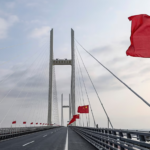
The five-storey border checkpoint, which once handled tourists and traders travelling between the two countries, has been destroyed. Only parts of its foundations remain. Nearby facilities, including travel agencies, a supermarket and a bridge linking China with Nepal, were also swept away.
Rescue operations have been complicated by unstable ground, heavy rain, landslides and mountainous terrain. Emergency workers have also faced the danger of temporary barrier lakes created when debris blocked sections of a nearby river.
Chinese authorities said 31 people had been confirmed dead and 531 were missing on their side of the border in their latest update. More than 250 foreigners were among those reported missing, according to local officials in Tibet.
The absence of a publicly released list of missing people has caused concern among families searching for relatives who may have been at the port when the flooding occurred. Information from the Chinese side has emerged more slowly than updates from Nepal, where authorities have regularly reported rescue and casualty figures.
Chinese authorities have defended their handling of the disaster and organised a visit for international journalists to the restricted area to demonstrate the ongoing rescue effort.
Access to Gyirong Port has been particularly difficult. The journey from Lhasa to the affected region takes several hours through mountain roads reaching elevations of nearly 13,000 feet. The final route to the port involves narrow roads and numerous sharp bends.
Thousands of rescue workers and heavy machinery were able to enter the area only after roads were cleared several days after the disaster. Before that, smaller teams had reached the site on foot, by boat or by aircraft.
Authorities have also warned of further hazards linked to a damaged glacier on Nepal’s Langtang Lirung mountain, which was connected to the landslide and flooding.
The disaster has raised concerns about the need for stronger monitoring, information sharing and early-warning systems between China and Nepal as extreme natural events become harder to predict.
For now, rescue teams remain focused on recovering victims and finding answers for families still waiting for news of their missing relatives.