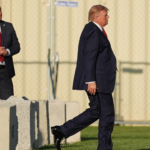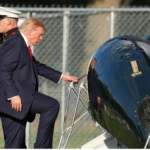
US President Donald Trump has suggested that Cuba could be next in Washington’s crosshairs, hinting at possible military action following US operations in Iran, even as his administration imposed fresh sanctions on Havana that drew sharp condemnation from Cuban officials.
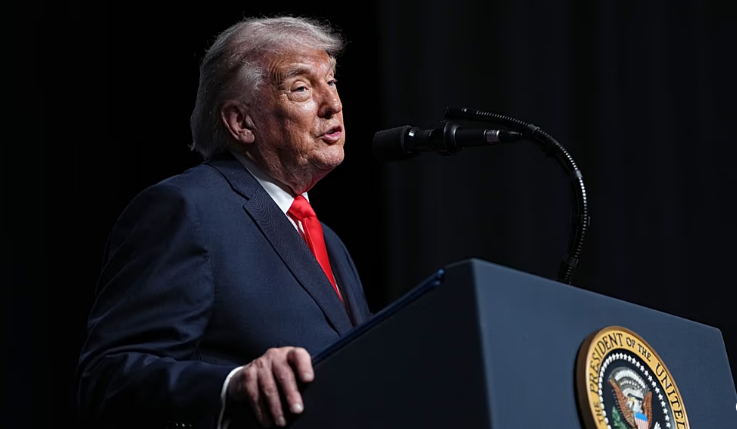
Speaking at an event hosted by the Forum Club of the Palm Beaches, Trump made remarks that appeared to link ongoing US military activity in the Middle East with future operations closer to home. He suggested that US forces could “take over Cuba almost immediately,” and made a joking reference to the US Navy and aircraft carrier deployments in the region.
Trump told attendees that military action against Cuba could follow the completion of operations elsewhere, saying he prefers to “finish a job” once it begins. He referenced a scenario in which a US aircraft carrier would approach Cuban waters, prompting a rapid surrender. The comments raised concern over the possibility of widening US military involvement in multiple regions.
The remarks come amid already heightened tensions between Washington and Havana. The Trump administration has spent months increasing pressure on Cuba, including a major policy shift earlier this year following US intervention in Venezuela that resulted in the removal of President Nicolás Maduro. Washington has accused Havana of supporting Maduro’s government through security assistance, a claim Cuba denies.
Since then, Cuba has faced worsening economic conditions, including severe fuel shortages that have disrupted transportation, healthcare services and electricity supply across the island. United Nations officials have warned that the country is experiencing a growing humanitarian crisis linked to sanctions and trade restrictions.
On Friday, Trump signed a new executive order expanding sanctions against Cuba. The measures target individuals and entities involved in key sectors of the Cuban economy, including energy, defence, mining, finance and security services. The order also authorises penalties against foreign banks conducting business with those designated.
In addition, Cuban officials accused of human rights violations or corruption will be subject to visa restrictions, preventing them from entering the United States.
Cuba’s Foreign Minister Bruno Rodríguez Parrilla strongly condemned the move, describing it as “collective punishment” against the Cuban people. He said the sanctions were deliberately timed and announced on May 1, a day of public demonstrations in Cuba against US policy.
Rodríguez also criticised Washington for what he called contradictory behaviour, accusing the US of promoting democracy abroad while suppressing dissent at home. He argued that the sanctions violate international law and the United Nations Charter.
The White House has repeatedly urged Cuban authorities to enter negotiations, warning that continued refusal could deepen isolation. Cuban President Miguel Díaz-Canel has rejected talks under pressure, insisting that any dialogue must be based on mutual respect and sovereignty.
With tensions rising and rhetoric intensifying, relations between Washington and Havana appear to be entering a new period of uncertainty.