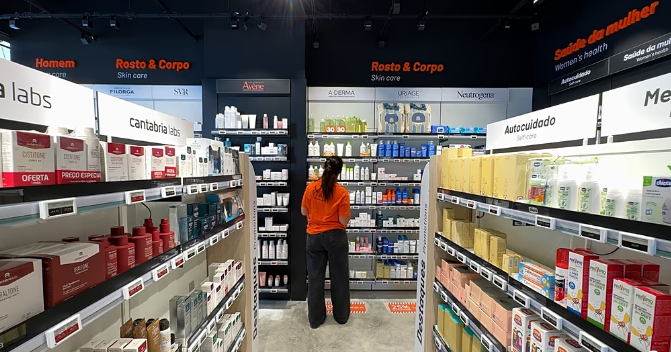
A fully automated parapharmacy in Lisbon is changing the way customers shop for health and wellness products by combining artificial intelligence, cameras and sensors to eliminate checkout counters and in-store staff.
Located in the Parque das Nações district, the store operates without cashiers or pharmacists on-site during normal business hours. Staff only enter the premises to restock shelves, while customers complete their purchases independently.
The concept was developed to allow pharmacists to spend more time on clinical care instead of retail operations, according to Catarina Dias, the pharmacist who manages Pharma&Go.
“We are investing in solutions that allow pharmacists and the professionals we have to focus on the clinical side while reducing the time spent on commercial tasks,” Dias said.
The shop stocks products that customers can purchase without a prescription, including skincare products, baby care items, supplements and oral hygiene products. Prescription medicines and over-the-counter drugs are not currently available.
Customers begin their visit by tapping a credit or debit card at the entrance. Once the payment method is verified, the door unlocks and shoppers can enter the store. The card used at the entrance is linked to everyone entering at the same time, and all selected products are automatically charged to that payment method when customers leave.
“There are no tills, no queues and no complications,” Dias said, explaining that customers simply enter, choose their products and walk out.
The system relies on hundreds of cameras and sensors working alongside artificial intelligence software that monitors customers and tracks products as they move through the store. The technology identifies which items have been removed from the shelves and automatically completes the purchase when the customer exits.
Dias said the automated system gives shoppers greater flexibility by allowing them to spend as much or as little time in the store as they choose. Some customers complete their shopping in less than a minute, while others take longer to compare products and read ingredient labels.
Since opening in November, the store has seen customer numbers increase every month as more people become familiar with the technology.
According to Dias, the system records an error rate of less than 2%, with most mistakes resulting from customer behaviour rather than technical failures.
She recalled one incident in which a customer politely held the door open for another shopper entering behind him. Because the system associated everyone entering together with the same payment card, both customers’ purchases were charged to the first visitor.
Although the concept was initially expected to appeal mainly to younger consumers, Dias said older customers have also embraced the technology. She noted that many shoppers in their seventies and eighties have found the process straightforward, helped by the store’s accessible design and simple payment system.
The 90-square-metre shop was developed through a partnership between Sensei and Glintt Life using private funding. Dias said an application for public funding under Portugal’s Recovery and Resilience Plan was unsuccessful because the project was not considered sufficiently innovative.
Despite that setback, she believes automated retail technology has significant potential and expects the concept to continue expanding in the future.