Jubilant scenes unfolded across India on Wednesday as Group Captain Shubhanshu Shukla became only the second Indian to travel to space and the first to reach the International Space Station (ISS), marking a milestone moment in the country’s growing space ambitions.
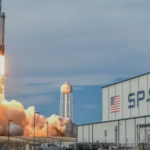
Shukla, a decorated Indian Air Force pilot, is serving as the pilot of the Axiom-4 (Ax-4) mission — a multi-national spaceflight operated by US-based private company Axiom Space in collaboration with NASA, SpaceX, ISRO, and the European Space Agency. The spacecraft lifted off from NASA’s Kennedy Space Center in Florida at 06:31 GMT (12:01 IST), carrying four astronauts including Shukla.
Once the Dragon capsule docks with the ISS after a 26-hour journey, Shukla will become the first Indian astronaut to board NASA’s orbiting laboratory — and the first Indian in space in 41 years, following cosmonaut Rakesh Sharma’s 1984 mission aboard a Russian Soyuz.
Prime Minister Narendra Modi hailed the launch as a “moment of national pride,” saying the astronaut carried “the hopes and aspirations of 1.4 billion Indians.” In Shukla’s hometown of Lucknow, his parents watched the launch alongside cheering students. The moment was marked by music, applause and patriotic fervour.
Speaking shortly after liftoff, the 39-year-old pilot sent a heartfelt message back to Earth: “We’re back in space after 41 years and what an amazing ride it’s been. This is not just my journey — it’s the beginning of India’s human spaceflight era.”
The mission, led by veteran NASA astronaut Peggy Whitson, also includes astronauts from Poland and Hungary — both returning to space after decades. For India, the mission marks a major leap ahead of its first crewed Gaganyaan mission in 2027 and longer-term goals of building a space station by 2035 and reaching the Moon by 2040.
During the two-week stay on the ISS, Shukla will assist with 60 scientific experiments, including seven developed by India. These range from studying microalgae as future space food to testing how seeds and tiny creatures called tardigrades survive in microgravity.
ISRO says Shukla’s experience will be “invaluable” for the country’s future space missions. The government has invested ₹500 crore in securing his seat and training for Ax-4.
While science is central to the mission, so is public engagement. Plans are underway for the astronaut to speak with Indian students from orbit, with a live interaction with Prime Minister Modi also expected.
“This has been a transformative year,” Shukla said before launch. “As I go into space, I carry not just instruments, but the dreams of a billion hearts.”