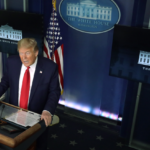

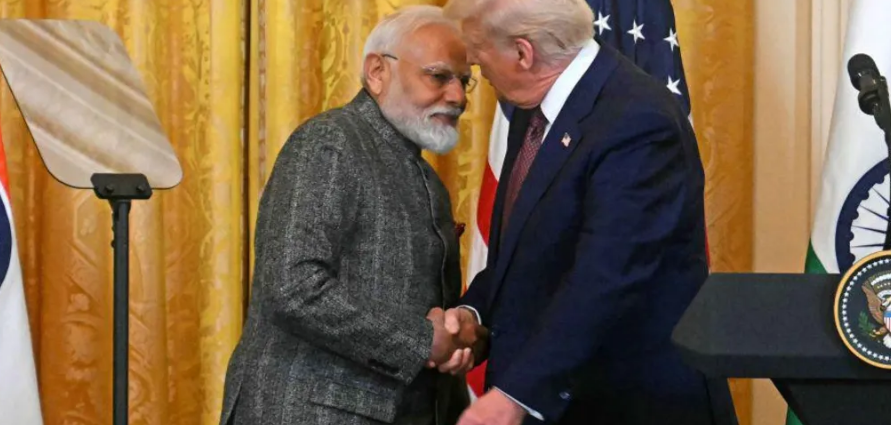
US President Donald Trump’s decision to impose 25% tariffs on goods imported from India, coupled with an unspecified penalty over its trade ties with Russia, has raised alarm in financial markets and among Indian policymakers, economists, and industry groups.
Set to take effect from August 1, the tariffs come as a blow to hopes of a near-term US-India trade deal and could dent India’s GDP growth, according to economists. The move also marks a sharp escalation in tensions between the two strategic partners, with Trump openly criticising India’s ongoing oil and arms purchases from Russia.
On his Truth Social platform, Trump said the penalties were a response to India “buying Russian oil and weapons at a time when everyone wants Russia to STOP THE KILLING IN UKRAINE.” He added: “We have done very little business with India. Their tariffs are too high, among the highest in the world.”
Experts say the full economic impact will depend on the fine print of the additional penalties. Aditi Nayar, chief economist at ICRA, warned the measures “are likely to pose a headwind to India’s GDP growth,” which the agency recently downgraded to 6.2% for the current fiscal year. Nomura estimated the tariffs could trim growth by 0.2% and lead to deeper monetary easing by India’s central bank.
Sectors expected to be hit hardest include textiles, pharmaceuticals, marine exports, leather, and automobiles—areas where India has built strong trade links with the US. Indian stock markets opened in negative territory on the news, reflecting investor concern over the potential fallout.
Trade policy expert Agneshwar Sen of EY India said the move places India at a disadvantage relative to Vietnam and China, both of which secured less severe tariffs through earlier negotiations. “The expected diversion of export supply chains to India is now unlikely,” he noted.
India’s commerce ministry said it is reviewing the announcement’s implications. Prime Minister Narendra Modi’s government reiterated its commitment to a “mutually beneficial trade deal” but stressed it would prioritise the interests of Indian farmers, entrepreneurs, and MSMEs.
The opposition Congress party blamed the government for a “catastrophic foreign policy failure,” pointing to Modi’s past support of Trump during a high-profile 2019 rally. Meanwhile, business groups like FICCI expressed concern but hoped the higher tariffs would be short-lived.
Despite the setback, both governments are expected to resume trade talks in August, with Washington aiming for a comprehensive agreement by autumn. Observers remain cautiously optimistic that tariffs could be revised downward as negotiations continue.
“The President insists on putting his stamp on every deal,” said Mark Linscott, a former US trade official. “For that to happen with India, it may now require direct outreach from Prime Minister Modi to break the impasse.”