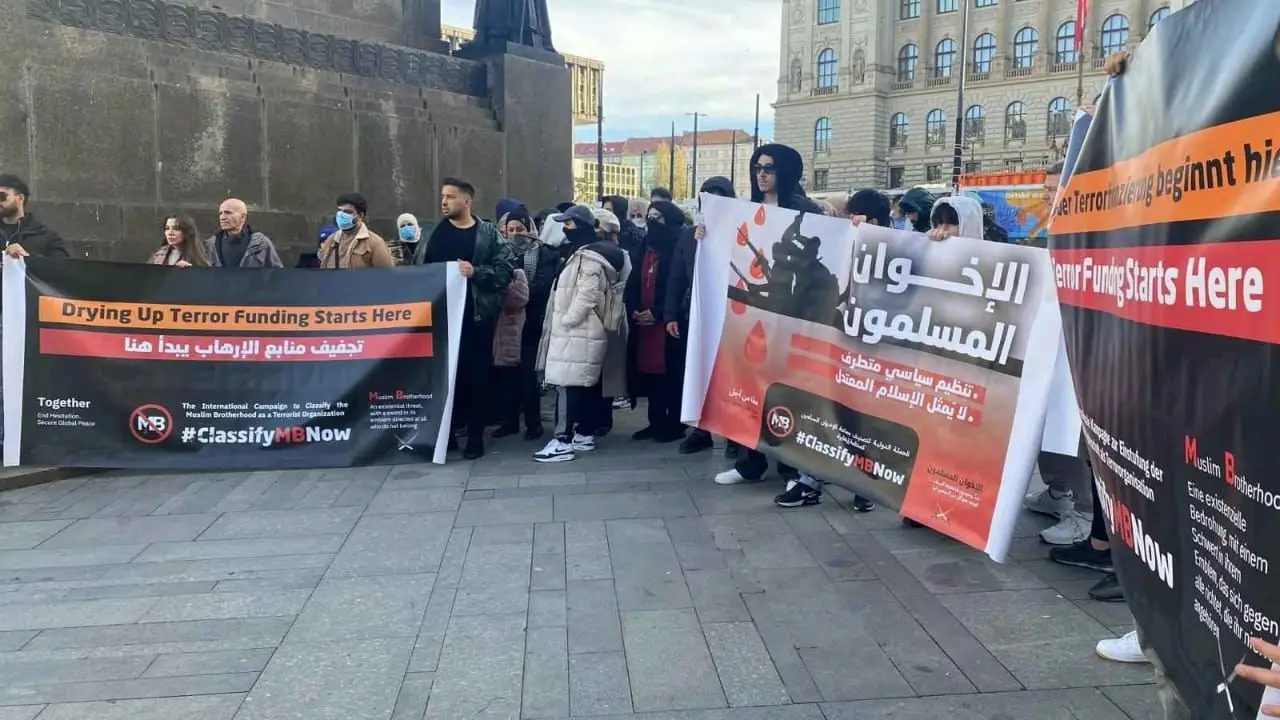
A series of protest demonstrations have been launched across several European cities, starting with Vienna and Prague, against the Muslim Brotherhood, calling for its designation as a terrorist organization.
These unprecedented actions are part of a media campaign running from November 11 to 24, 2025, representing a turning point in how Europe confronts extremist ideology.
The campaign’s objectives are not limited to security or legal aspects; they also extend to media, cultural, and awareness dimensions, emphasizing the importance of guiding both Muslim communities and Europeans toward a deep understanding of the risks associated with extremist religious discourse.
The campaign seeks to expose the exploitation of religion as a tool for expanding political and social influence and highlights the ways in which young people are recruited into political conflicts that have no connection to the core values of moderate Islam.
According to official campaign data, extremist groups do not represent moderate Muslims, and the spread of extremist ideology harms the image of Muslim communities and poses a direct threat to coexistence among different religions and cultures in Europe.
From a cultural perspective, the campaign aims to promote the concepts of coexistence and tolerance and to reaffirm the core values of moderate Islam, such as justice, mercy, and respect for others. This comes in the context of countering the efforts of extremist groups to blur the line between religion and politics and to exploit religious and charitable activities to impose ideological agendas on European societies.
The campaign emphasizes that protecting mosques and cultural centers from political exploitation is not merely a security issue but a cultural and social matter related to safeguarding genuine religious identity and protecting youth from being drawn into conflicts that do not reflect their values.
The media plays a pivotal role in this campaign by covering the protest demonstrations and highlighting their objectives, as well as providing in-depth analyses of the methods used by extremist groups to infiltrate European societies. Media coverage aims to raise public awareness of the dangers of extremist ideology and to expose the use of religion for political purposes, contributing to building popular support for legal and security measures against these groups.
Here, the media functions not only as a means of reporting events but also as a cultural and educational platform that helps shape societal awareness about the importance of protecting coexistence and social peace.
The campaign also includes educational programs directly targeting youth and Muslim communities, teaching them how to distinguish between religion as a spiritual value and as a tool for political exploitation. These programs include workshops, discussion discussion sessions, and educational initiatives aimed at strengthening the intellectual resilience of young people against attempts to recruit them or draw them into conflicts far removed from their fundamental values. This focus on education and culture reflects the importance of integrating education and media into a comprehensive strategy to counter extremism.
The campaign further stresses the importance of fostering collaboration between governments and civil society organizations to ensure that counter-extremism efforts are not limited to security and legal measures but also encompass building an informed media and cultural environment.
It highlights the need to support victims of violence resulting from extremist group activities, considering this part of a cultural strategy to create a society more resilient to extremism, while ensuring the protection of human rights and coexistence among various sects and communities.
From a strategic perspective, the protest demonstrations and accompanying media coverage serve as effective tools to pressure European decision-makers into adopting stricter policies toward extremist groups. Organizers note that enhancing media and cultural awareness helps generate growing popular pressure, prompting governments to take practical measures, such as officially designating groups as terrorist organizations, freezing their assets, and holding their leaders accountable in international courts.
The campaign affirms that European society has become more aware of the dangers posed by extremist ideology and that employing media and culture to confront this phenomenon is a crucial part of an integrated strategy to protect coexistence and social peace. The messages conveyed by the demonstrations and media activities are not merely symbolic warnings; they reflect the ability of societies to confront ideological and political threats and to foster a culture of civic belonging and responsible citizenship.
In conclusion, the European campaign against the Muslim Brotherhood demonstrates how media, culture, and community awareness can be integrated into a comprehensive strategy to combat extremism. The protest demonstrations serve as a symbolic and effective tool, while the media plays a central role in guiding public opinion, enhancing the ability of youth and communities to understand risks, and protecting themselves from the political or ideological exploitation of religion.
The campaign also emphasizes that protecting societies from extremism requires integrating security and legal efforts with media, cultural, and educational programs, enabling Europe to better withstand ideological threats and ensuring the continuation of peaceful coexistence among its diverse cultural and religious components.