


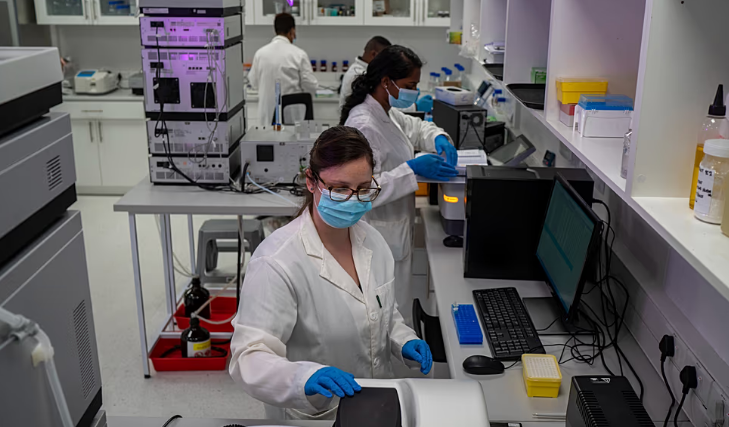
Women remain significantly underrepresented among inventors in Europe despite a steady increase in the number of female scientists across the continent, according to a new report from the European Patent Office.
The study found that women accounted for just 13.8 percent of inventors listed in European patent applications in 2022. Although the share has grown from about two percent in the late 1970s and from 13 percent in 2019, progress remains slow.
“Gender gaps still run through the entire innovation system — from the day you sign up to university, to the day you become a team leader or open your own start-up,” Roberta Romano-Götsch, chief sustainability officer and spokesperson at the European Patent Office, said in an interview.
She warned that the pace of change remains far from balanced. “The pace is too slow and far from being balanced,” Romano-Götsch said.
The findings come at a time when the number of women working in science and engineering in the European Union has increased significantly. EU data show that female scientists and engineers rose from 3.4 million in 2008 to 5.2 million in 2014, reaching around 7.9 million in 2024.
In certain research areas, women now make up a large share of the workforce. In medical and health sciences, women represent about 54 percent of all researchers, the highest proportion across research and development fields.
Yet the increase in women working in science has not translated into similar representation in innovation and patenting. Experts often refer to this trend as the “leaky pipeline,” where women are well represented in education and early careers but gradually disappear from senior roles and leadership positions.
The European Patent Office report said the inventive potential of female researchers is comparable to that of men, suggesting the patent gap cannot be explained by differences in ability or productivity.
Women’s contributions to research and innovation can be seen in several high-profile breakthroughs. Rochelle Niemeijer developed a portable artificial intelligence-based test kit designed to quickly diagnose bacterial infections. Laura van’t Veer and her team created a gene-based test that helps doctors assess the risk of breast cancer returning, allowing many patients to avoid unnecessary chemotherapy. Katalin Karikó, who received the Nobel Prize in Physiology or Medicine in 2023, helped develop modified messenger RNA technology that later became the foundation for COVID-19 vaccines and potential treatments for other diseases.
The report also found that women are more visible in certain fields. In life sciences, including pharmaceuticals, biotechnology and food chemistry, women account for more than 30 percent of inventors, the highest level among all sectors.
Despite these achievements, several barriers continue to affect women’s recognition and advancement. Researchers point to the “Matilda effect,” a term describing how women’s scientific contributions are sometimes overlooked or attributed to male colleagues.
Romano-Götsch said this issue can affect recognition in both academic publications and patent applications. In some cases, women contribute to research but are not credited as inventors when patents are filed.
She said closing these gaps is important not only for fairness but also for innovation and competitiveness. Increasing women’s participation in invention could strengthen research teams, expand the talent pool and improve outcomes across Europe’s scientific and technology sectors.