
A decade after Greece’s financial crisis pushed its banking system to the brink and wiped out most of the country’s stock market value, Athens has emerged as one of the world’s strongest-performing equity markets, outperforming major global indices including the Nasdaq 100 over the past five years.
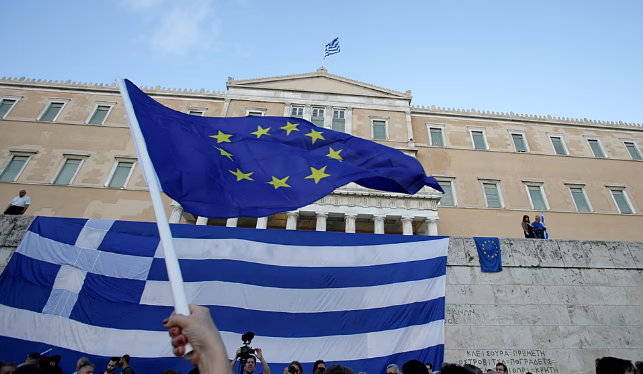
The recovery marks a dramatic reversal for a country once viewed as the eurozone’s biggest financial risk. In 2015, Greece imposed capital controls, shut its banks and froze trading on the Athens Stock Exchange as fears of sovereign default shook global markets. At the height of the crisis, cash withdrawals were limited to €60 a day and Greek government debt had been downgraded to junk status by major ratings agencies.
By February 2016, the Athens Composite Index had fallen more than 90 percent from its 2007 peak, while Greek banking shares lost nearly all their value.
Today, the picture looks very different.
The Athens Composite Index has returned about 146 percent over the past five years on a total-return basis, outpacing the Nasdaq 100, which gained around 116 percent during the same period. Greece’s rebound has been driven by sweeping banking reforms, stronger public finances and renewed investor confidence.
Greek banks played a central role in the recovery. Lenders including National Bank of Greece, Eurobank, Piraeus Bank and Alpha Bank spent years dealing with enormous volumes of bad loans accumulated during the debt crisis. At one point, nearly half of all loans on their books were classified as non-performing.
The clean-up accelerated under the government-backed Hercules asset protection scheme, which allowed banks to remove billions of euros in troubled loans from their balance sheets. Improved profitability, stronger deposits and tighter cost controls followed.
By 2025, the country’s four biggest banks had collectively posted profits close to €5 billion, with several restoring shareholder payouts and share buybacks.
At the same time, Greece carried out major tax and fiscal reforms under international supervision. Digital tax collection systems boosted compliance rates, while government finances steadily improved. Greece recorded primary budget surpluses in both 2024 and 2025, helping reduce its debt burden sharply from pandemic-era highs.
The recovery also prompted credit rating agencies to restore Greece to investment-grade status for the first time in more than a decade. Moody’s became the last major agency to do so in 2025.
International investors have increasingly returned to Greek assets, encouraged by still-attractive valuations compared with other European markets. Shares in some Greek banks have risen roughly 500 percent over the last five years, though many still trade at lower earnings multiples than their European peers.
Athens also received a major boost after Euronext completed its acquisition of the Greek stock exchange in late 2025, increasing the visibility of Greek companies among international investors and index funds.
Despite the turnaround, challenges remain. Greece’s economy is still heavily reliant on tourism, inflation remains elevated and officials warn that tensions in the Middle East could affect growth and energy prices.
Even so, Greece’s transformation from financial crisis symbol to one of Europe’s strongest market recoveries has become one of the most notable turnaround stories in global finance.