


A major global shift in industrial strategy is underway as companies across Europe and the United States rethink where and how they manufacture, even as overall investment plans for the coming years decline sharply, according to a new report from the Capgemini Research Institute.
The study finds that while artificial intelligence is becoming central to corporate strategy, total planned investment over the next three years has fallen significantly from 4.7 trillion dollars to about 2.5 trillion dollars. Despite the decline, researchers say the change reflects a strategic adjustment rather than a withdrawal, with firms focusing spending on more targeted and less capital-heavy initiatives.
Reindustrialisation is now firmly embedded in corporate planning. About 73% of large companies across Europe and the United States already have active reshoring or restructuring strategies in place, up from 59% in 2024. In Spain, the share is even higher, with 76% of firms reporting active plans, reflecting a rapid shift in industrial policy thinking.
The report shows that companies are prioritising resilience over short-term profit, with 86% of executives stating that strengthening supply chains has become more important than immediate financial returns. This shift is being driven largely by geopolitical uncertainty and disruptions to global trade networks.
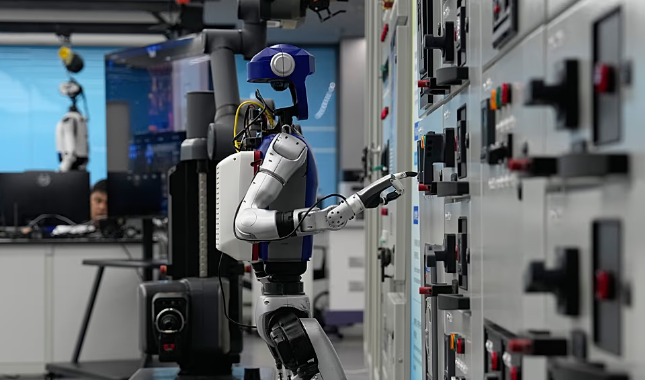
Artificial intelligence is playing a central role in this transition. Around 87% of companies plan to invest in AI, automation systems and digital twins to make production more efficient and reduce the cost of bringing manufacturing closer to home. These technologies are increasingly viewed as essential to offset higher labour and operational costs in reshored production.
The direction of reindustrialisation, however, is not uniform across regions. The United States is focusing on reshoring production back to domestic facilities, while Europe is leaning toward “friendshoring,” shifting production to politically aligned countries rather than bringing it entirely back home.
Countries such as India, Vietnam, Mexico and Canada are emerging as key beneficiaries of this redistribution of global manufacturing, as companies seek to reduce dependence on any single region. Despite this diversification, more than half of firms say they have no plans to fully exit the Chinese market, highlighting continued interdependence in global supply chains.
Spain stands out as one of the most notable examples of acceleration in this trend. Just two years ago, only 45% of Spanish companies had a formal reindustrialisation strategy. That figure has now jumped to 76%. According to the report, 85% of Spanish executives say geopolitical pressure has been the main driver behind the shift, while 60% are continuing with their plans even if short-term costs increase.
The findings suggest that global industry is not retreating from internationalisation, but reorganising around risk management, technological integration and a more selective approach to investment.